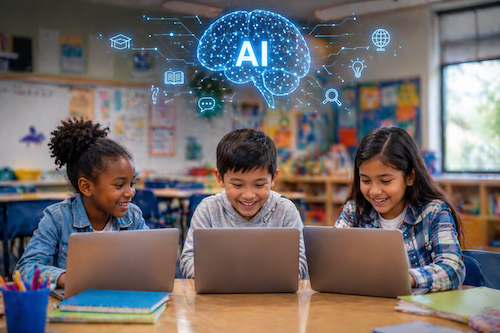
Educators and students face a genuine tension with AI in English classrooms. While concerns about academic dishonesty are real, AI tools offer three concrete ways to strengthen reading and writing skills when used properly.
First, AI writing assistants provide immediate feedback on drafts. Students submit work to tools like ChatGPT or Grammarly and receive suggestions on sentence structure, clarity, and organization before final submission. This mimics the role of a writing tutor. Students revise based on feedback, deepening their understanding of grammar and composition principles. The key difference from cheating: students do the actual revising, not the AI.
Second, AI supports vocabulary and comprehension development. Students can ask tools to explain difficult passages, define words in context, or summarize complex texts. For struggling readers, this reduces frustration and keeps them engaged with grade-level material. A student reading Shakespeare, for example, can request line-by-line explanations without abandoning the original text. Understanding follows, not replacement of reading.
Third, AI enables personalized writing practice through dialogue. Students interview AI characters in different genres, argue positions with AI debate partners, or receive grammar explanations tailored to their specific mistakes. This interactive approach works for students who need repetition or those seeking challenge beyond classroom assignments.
The catch: teachers must establish clear boundaries. Using AI to write essays replaces learning. Using AI as a research partner or revision consultant builds skills.
Schools including Acton Academy and several districts in Massachusetts have already developed AI literacy frameworks that permit these uses while prohibiting output submission without student composition. They train teachers to spot AI-only work and students to document which parts they wrote versus which they revised.
This requires explicit instruction. Students need coaching on when AI helps versus when it shortcuts learning. Teachers need professional development on designing assignments that leverage AI's strengths without enabling academic dishonesty.
The question isn't whether AI belongs