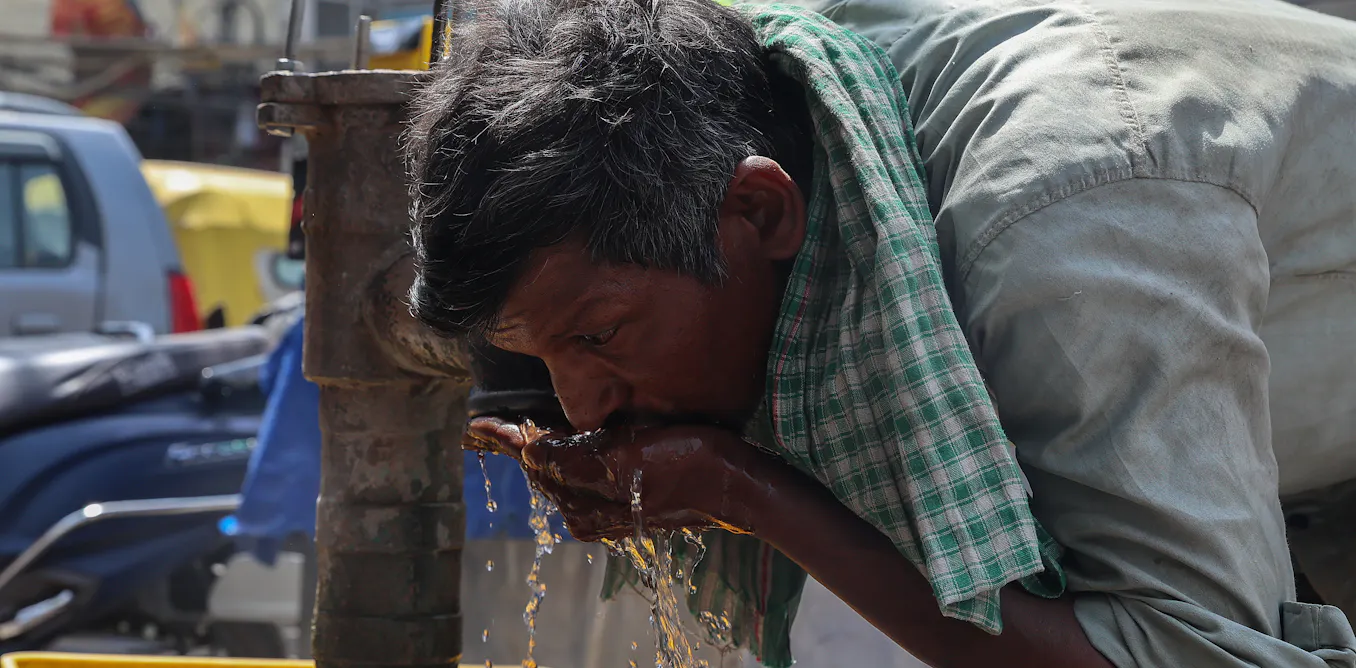
# Climate Crisis Intensifies Health Risks Across South Asia
India and Pakistan are experiencing a sustained heatwave that combines extreme temperatures with high humidity, creating dangerous conditions for millions of people. The combination amplifies heat-related illness risk because humidity prevents sweat from evaporating efficiently from the skin, blocking the body's primary cooling mechanism.
When temperatures climb alongside humidity, the "wet bulb temperature" rises, a measure combining heat and moisture that determines how effectively humans can cool themselves. In affected regions, wet bulb readings have reached levels where even healthy people face heat exhaustion and heatstroke within hours of outdoor exposure.
The health impacts ripple across populations unevenly. Outdoor laborers, agricultural workers, and informal sector employees face the greatest immediate danger because their jobs require sustained physical effort in open conditions. Children, elderly adults, and people with chronic illnesses are also highly vulnerable. Urban poor communities often lack air conditioning and live in neighborhoods that absorb and radiate more heat than affluent areas.
Schools have closed in some regions, and construction work has halted during peak heat hours. Power grids strain under surging demand for cooling, creating blackout risks that leave hospitals and households without electricity precisely when cooling matters most.
Climate change is intensifying heatwave frequency, duration, and severity across South Asia. Scientists have documented that anthropogenic warming has made such extreme heat events more common and more intense. Projections show the region will experience longer, hotter summers without significant emissions reductions.
The heatwave underscores infrastructure vulnerabilities. Many South Asian hospitals lack reliable backup power for medical equipment. Water supplies become strained as demand spikes. Public health systems struggle to communicate heat safety guidance to rural populations without reliable internet access.
Agricultural production faces disruption as well. Crop stress and livestock losses during sustained heat threaten food security and rural livelihoods. Irrigation demands spike