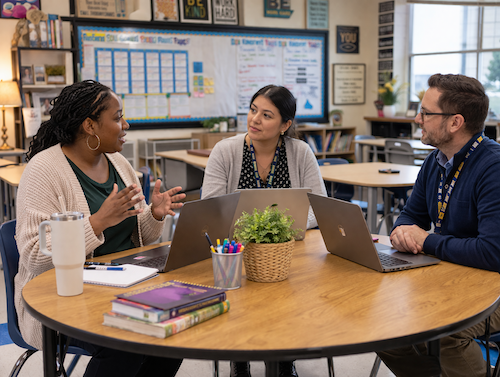
# Educator Voice Central to Sustainable School Change
School leaders across the country are implementing new initiatives, instructional frameworks, technologies, and student support approaches. Success depends on whether educators help shape these changes from the start.
When teachers and staff have a voice in designing school improvements, change becomes a shared commitment rather than a top-down mandate. This principle matters because educators work directly with students daily. They understand classroom realities, student needs, and what instruction actually looks like in practice. Administrators who exclude teacher input risk implementing solutions that sound good in theory but fail in practice.
Research backs this approach. Studies show that teacher buy-in predicts whether reforms stick. When educators participate in planning, they develop ownership of outcomes. They can identify barriers before rollout. They catch unintended consequences. They suggest modifications that improve the design.
The opposite pattern repeats across districts. A district office adopts a new literacy curriculum without consulting elementary teachers. Teachers resist because nobody asked how the program fits their classroom contexts. Implementation falters. The district spends money on a tool teachers never fully embrace.
Sustainable change requires structure. Schools can build educator voice into decision-making through committees that include classroom teachers, not just administrators and coaches. These groups should meet early, not after decisions are made. Teachers need real influence over timelines, resource allocation, and how initiatives roll out.
This approach takes longer than top-down mandates. Leaders cannot simply announce a change and expect compliance. Instead, school systems must create space for teachers to ask questions, raise concerns, and contribute ideas.
Districts like Montgomery County Schools in Maryland and districts in the Learning Forward network have embedded educator input into change processes. Teachers sit on curriculum committees. They pilot new programs and provide feedback. They help design professional development aligned to their actual needs.
When school leaders treat educators as partners in improvement rather than implementers of directives, staff morale improves. Teacher turn