# The Screen-Time Debate's Blind Spot
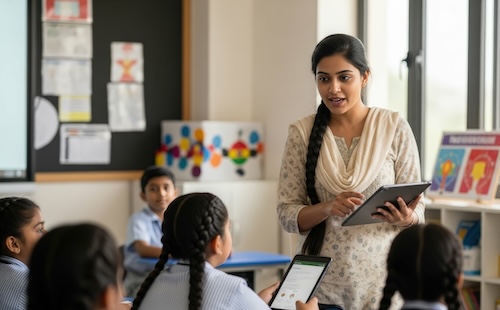
Teachers face a genuine dilemma. Artificial intelligence offers real classroom benefits, but educators worry that deploying these tools means adding more screen time for students already drowning in digital devices.
A fifth-grade teacher in São Paulo voiced this concern during a professional development session, asking how to harness AI for lesson planning without trapping children behind yet another screen. The question reflects a tension echoing across classrooms worldwide. Teachers recognize AI's potential to streamline preparation, customize instruction, and free up time for actual teaching. Yet they also confront growing evidence linking excessive screen exposure to attention problems, sleep disruption, and social skill delays in young students.
The blind spot in this debate lies elsewhere. The conversation fixates on student screen time while overlooking how AI can reduce teacher workload in non-digital ways. AI-powered lesson planning tools, curriculum design assistants, and grading automation don't require students to see a screen at all. These applications work behind the teacher's desk.
When educators use AI to draft lesson outlines, generate discussion questions, or organize assessment data, students benefit from better-prepared instruction delivered through traditional methods. A teacher who spends two hours per night on lesson prep can redirect that energy toward small-group instruction, one-on-one conferences, or simply being present and attentive in the classroom.
The real goal involves decoupling AI adoption from screen proliferation. A teacher using an AI writing assistant to create more engaging prompts for handwritten reflection journals uses technology without adding screen time. A teacher employing AI to analyze student work patterns can make more informed decisions about pacing and differentiation without requiring students to log in to another app.
This distinction matters. The screen-time debate often collapses two separate questions: Is AI in schools good? And, Are screens bad for kids? Those are not the same question.