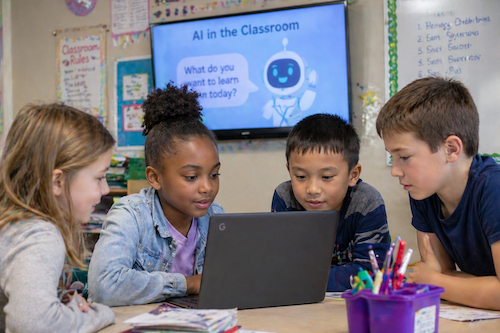
Schools across the country lack consistent policies for how artificial intelligence enters classrooms, leaving individual teachers to make their own decisions about when and how to use AI tools.
This patchwork approach creates vastly different student experiences. In one classroom, a teacher might deploy AI tutoring software to personalize math instruction. Down the hallway, another teacher bans generative AI entirely from assignments. A third permits students to use ChatGPT for brainstorming but not for drafting essays.
Without district-level guidance, teachers operate from their own comfort levels and beliefs about technology. Some view AI as a productivity tool that frees up time for deeper instruction. Others worry about academic integrity, student privacy, or the technology's accuracy. Many simply lack training to evaluate which tools actually work.
This inconsistency confuses students. A ninth grader learning that AI is off-limits in English class may face completely different rules in science. Parents struggle to understand what their children are expected to learn about AI literacy itself. Educators can't benchmark student progress when classrooms use different tools or restrict AI differently.
Districts that have created shared AI frameworks report clearer outcomes. These policies typically address five areas: when students can use generative AI, what disclosure students must provide, how schools protect student data, teacher professional development requirements, and academic integrity boundaries.
The challenge runs deeper than policy writing. Schools need resources to evaluate AI products, time for teachers to learn tools before deploying them, and clear communication with families about why certain choices matter. Many districts simply lack budget for this work.
The current moment resembles the early days of internet adoption in schools. Some educators embrace new technology quickly. Others remain skeptical. Without coordinated direction, schools risk creating digital divides where student access to AI learning depends on zip code or which classroom they walk into.
Districts that wait risk falling behind on AI literacy. Students will encounter these tools throughout their lives.