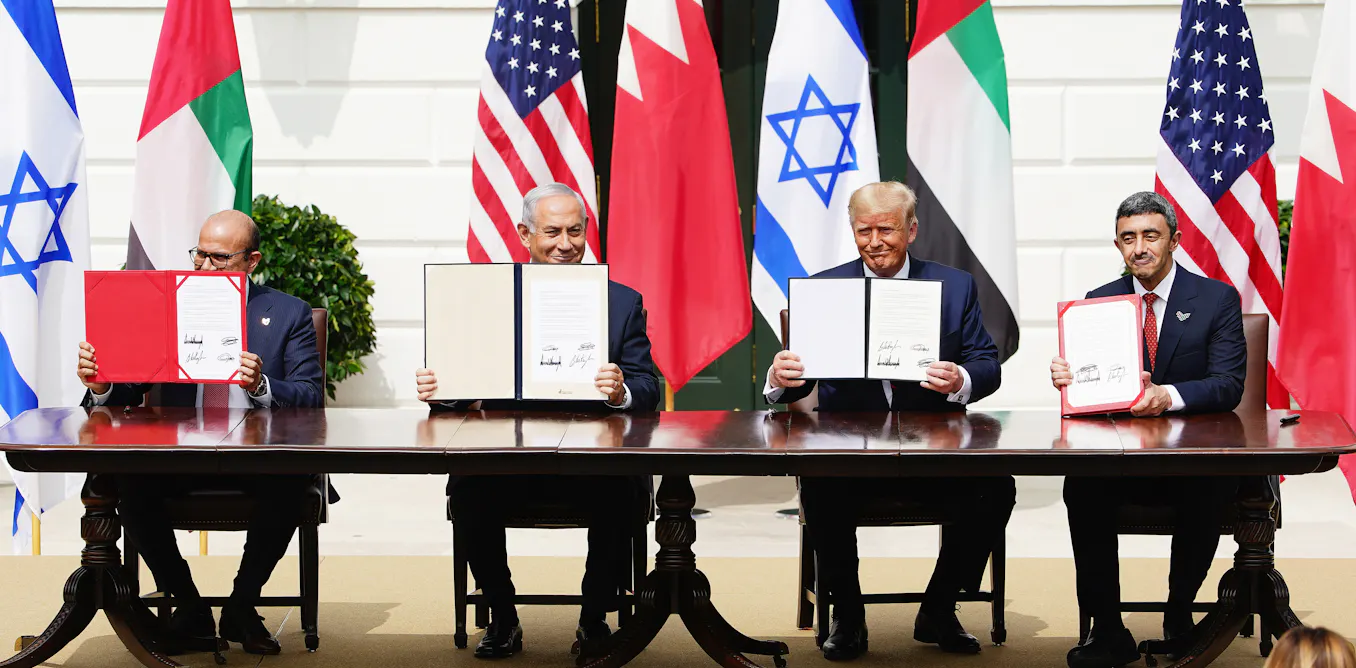
# Trump's Push for Abraham Accords Expansion Faces Regional Skepticism
Former President Donald Trump is attempting to expand the Abraham Accords, the 2020 agreement that normalized relations between Israel and the United Arab Emirates and Bahrain. Trump's new push for additional Arab nations to join the framework has encountered limited interest, with countries remaining silent or noncommittal in response to his appeals.
The silence reflects deeper problems. Trust in American foreign policy leadership has deteriorated significantly across the Middle East. Years of shifting U.S. commitments, military withdrawals, and perceived inconsistency have left regional leaders uncertain about the stability and value of American diplomatic initiatives.
Several factors complicate Trump's expansion strategy. The ongoing Israeli-Palestinian conflict remains unresolved, making normalization politically risky for Arab governments facing domestic pressure. Public opinion across the region remains deeply opposed to any moves seen as abandoning Palestinian concerns. Additionally, countries like Saudi Arabia, which Trump hoped would sign, have pursued independent foreign policy paths and strengthened ties with nations like China and Russia.
The Abraham Accords themselves achieved limited but real results with the UAE and Bahrain establishing formal diplomatic and economic ties with Israel. However, these nations represented smaller players with less at stake in the Palestinian question compared to larger Arab states like Saudi Arabia, Egypt, or Jordan.
Trump's demand that other countries join the accords has produced no new signatories, suggesting the initiative has reached a natural limit. Regional leaders appear focused on hedging bets across multiple powers rather than deepening alignment with Washington. The broader context of U.S. credibility challenges in the Middle East, combined with unresolved Palestinian issues, makes expansion unlikely without significant changes to underlying conditions or American policy approaches.