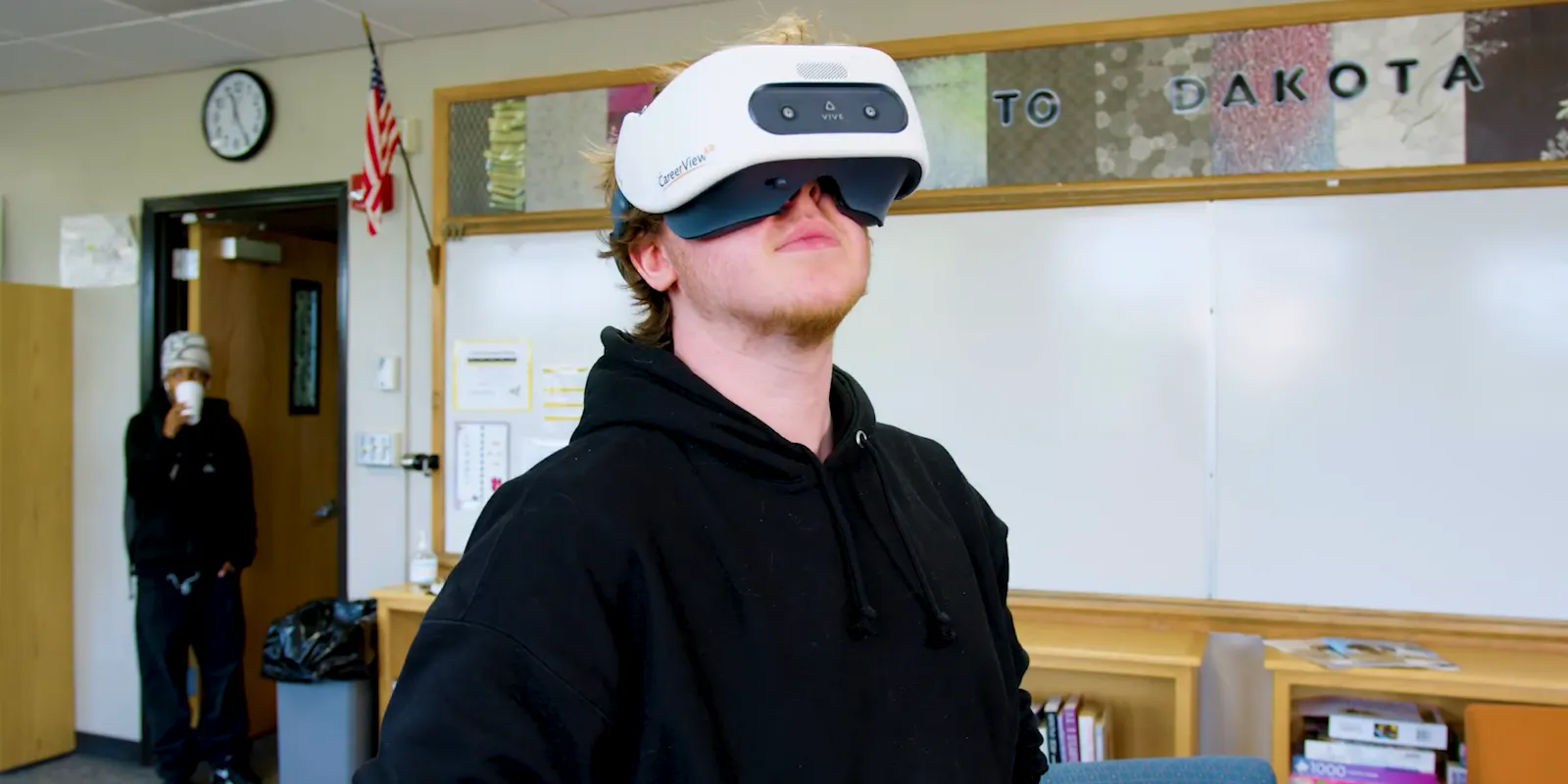
# VR Gives North Dakota Kids an Early Career Jump Start
North Dakota is deploying virtual reality technology to expose students to real-world career pathways before they graduate. The state's VR career exploration program places students in immersive simulations where they can experience jobs across multiple sectors, from renewable energy to healthcare to skilled trades.
Students can climb inside a wind turbine to understand energy production roles, observe procedures in an emergency room setting, and work alongside mechanics in automotive repair scenarios. These VR experiences give teenagers hands-on exposure to careers that typically require on-site apprenticeships or years of training to access.
The initiative addresses a persistent challenge in rural and smaller states. North Dakota students often lack proximity to diverse employers and internship opportunities. VR eliminates geographic barriers by bringing career environments directly into schools. Students can test aptitude and interest in fields without travel costs or requiring employers to host dozens of visitors.
Virtual reality career exploration aligns with broader state and federal priorities around workforce development. As skilled trades face persistent shortages across construction, manufacturing, and utilities, early exposure programs help pipeline talent into high-demand fields. Students who experience these careers through VR can make more informed decisions about post-secondary pathways, whether that means trade certification, apprenticeships, or four-year degrees.
The program also serves equity goals. Students from lower-income families and rural areas historically have fewer mentorship and networking opportunities with working professionals. VR democratizes that access. A student in a rural North Dakota district can now observe and interact with the same career scenarios as peers in larger markets.
Implementation requires school technology infrastructure and teacher training to integrate VR experiences into career exploration curricula. North Dakota schools are working with education technology providers to make simulations available across districts.
Other states are watching VR career programs closely. Kentucky, Connecticut, and California have launched similar initiatives. The outcomes data emerging from these programs will shape