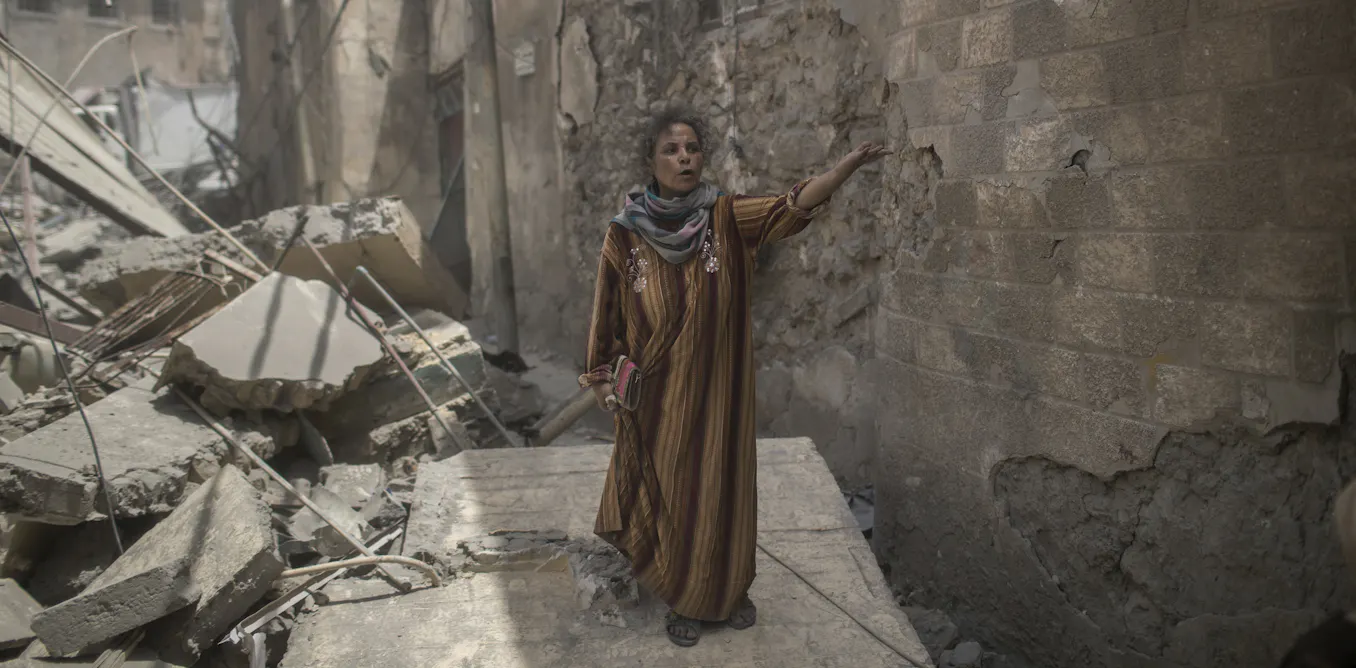
# When Wars Destroy Heritage, Women Lose More Than Monuments
The destruction of cultural heritage during armed conflict carries a disproportionate impact on women that extends far beyond the loss of historical monuments. New research reveals that heritage sites serve as critical spaces for female socializing, economic activity, and cultural transmission in conflict-affected regions.
Women in war zones rely on heritage sites and cultural spaces as gathering places where they conduct business, build community networks, and pass traditions to younger generations. When armed conflict destroys these locations, women lose access to safe spaces for social connection and economic opportunity. The damage disrupts the informal networks that sustain families and communities when formal institutions collapse.
The research highlights how heritage destruction affects gender differently than it impacts men. While documented accounts of cultural loss focus on archaeological value and historical significance, they often overlook the gendered dimensions of these sites. Women's roles as custodians of cultural practices, oral histories, and community rituals receive minimal attention in post-conflict recovery and reconstruction efforts.
This gap has real consequences. Reconstruction priorities typically emphasize monuments and buildings themselves rather than the social functions they served. Recovery programs fail to account for how women's lives reorganize around lost gathering spaces. Female-led economic activities tied to heritage sites, from craft production to informal commerce, remain invisible in damage assessments.
The findings argue for gender-inclusive approaches to documenting and rebuilding cultural heritage in post-conflict settings. Recovery plans should identify and restore the specific functions heritage sites served for women's economic security and social cohesion. This requires speaking directly with affected women about what they lost when sites were destroyed, not simply cataloging architectural damage.
Understanding heritage destruction through a gendered lens matters for post-conflict stability. When reconstruction ignores women's needs and the social roles these spaces filled, recovery efforts fail to address core drivers of community resilience. Integrating women's perspectives into heritage assessment and rebuilding