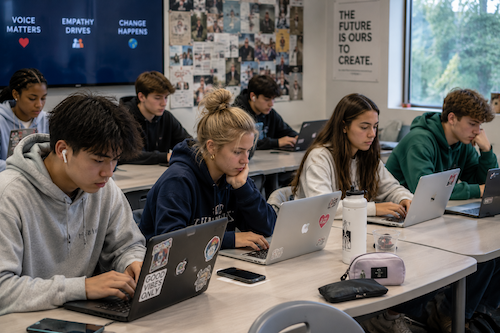
Gen Z students view artificial intelligence more optimistically than many adults expect, according to new research examining how young people approach career planning and educational decisions.
A recent survey ranking Gen Z's top 100 dream colleges and preferred employers reveals that students express cautious optimism about AI's role in their futures. Rather than viewing automation as purely threatening, many students recognize both opportunities and challenges that AI presents in the job market.
The report captures a generation navigating unprecedented complexity. Gen Z entered the workforce and pursued higher education during rapid AI advancement, economic uncertainty, and shifting labor markets. Their outlook reflects pragmatism. Students acknowledge legitimate concerns about job displacement and AI bias, yet many remain focused on acquiring skills that complement rather than compete with automation.
The data shows Gen Z prioritizes educational institutions and employers aligned with their values around technology. Students report seeking schools and companies with transparent AI policies, emphasis on human-centered work, and commitments to ethical technology development. They view AI literacy as essential preparation rather than optional knowledge.
Key findings indicate Gen Z students integrate AI considerations into college selection. Schools offering AI curriculum, interdisciplinary programs combining technical and liberal arts skills, and transparent discussions about automation rank higher in student preferences. Similarly, employers demonstrating thoughtful AI implementation and workforce investment appear more attractive to graduating students.
This generational perspective contrasts sharply with widespread anxiety about AI's impact on entry-level jobs and white-collar work. Rather than despair, Gen Z demonstrates strategic optimism. Students pursue education that develops uniquely human capabilities: critical thinking, creativity, emotional intelligence, and complex problem-solving. They recognize these skills remain difficult to automate.
The survey reflects broader patterns in how Gen Z approaches uncertainty. Having witnessed multiple crises and disruptions, this generation exhibits resilience and adaptability. Their optimism about AI stems not from naivety but from recognition that technological change is inevitable and that proactive skill development matters more than