# Sustainable Change Starts With Educator Voice
School leaders pursuing reform initiatives face a consistent challenge: getting lasting buy-in from teachers. A new focus on educator voice offers a concrete answer to this problem.
When teachers shape decisions about new instructional frameworks, technologies, and student support systems, those changes stick. Schools that invite educator input from the planning stage report stronger implementation and better student outcomes compared to schools where administrators impose changes from the top down.
The evidence is straightforward. Teachers spend six hours daily with students. They see where systems fail, what students need, and which approaches actually work in real classrooms. When leaders exclude this perspective, they lose critical information. When they include it, teachers become invested in success rather than resistant to mandates.
This principle applies across the board. A school adopting new literacy curriculum that ignores teacher feedback wastes resources. Teachers will underuse tools they didn't help select. A district rolling out new classroom technology without consulting educators guarantees slower adoption and lower effectiveness. But schools that ask teachers what they need, listen to their concerns, and incorporate their suggestions see faster implementation and sustained use.
Educator voice also builds morale. Teachers report higher job satisfaction when leaders value their expertise and include them in decision-making. This matters for retention, especially in districts struggling with teacher shortages.
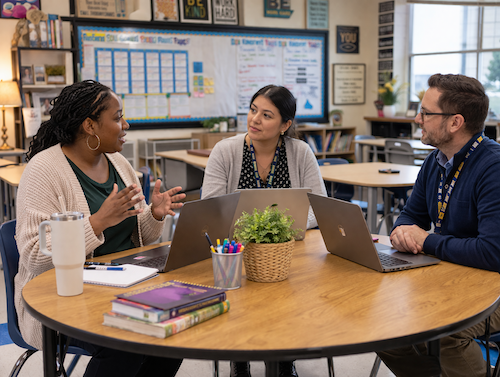
The practical shift is simple but profound. Instead of announcing initiatives, leaders convene teacher teams early. They ask what's working and what isn't. They create structures for ongoing feedback as changes roll out. They adjust based on what teachers observe in classrooms.
This approach treats teachers as professionals with legitimate expertise, not obstacles to change. It recognizes that sustainable school improvement requires collective commitment, not compliance. When educators feel heard and see their input reflected in final decisions, they own the work. That ownership transforms isolated initiatives into lasting shifts in how schools operate and serve students.