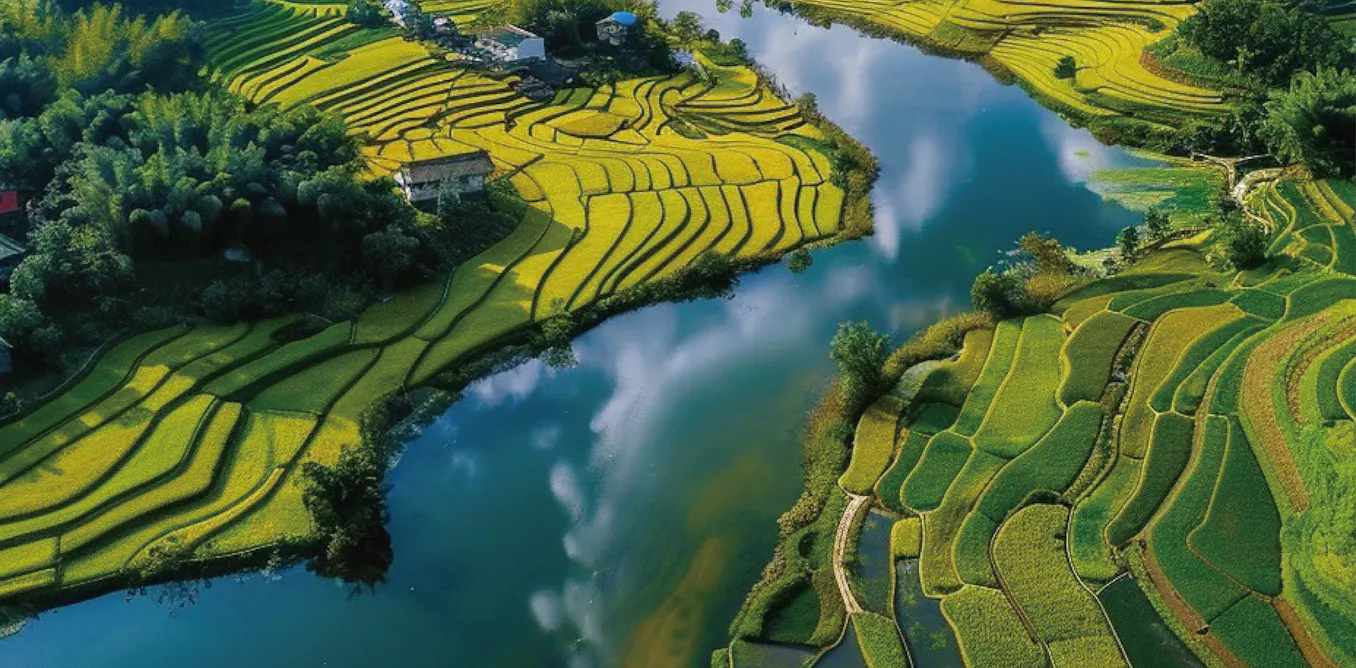
Rice production generates roughly 10 percent of global agricultural greenhouse gas emissions, a share that continues climbing as farmers worldwide expand paddies to feed a growing population. A new study identifies which farming practices cut emissions while maintaining crop yields, and flags a supposedly climate-friendly technique that actually worsens the problem.
Flooded rice paddies release methane as soil microbes decompose organic matter in oxygen-poor conditions. The gas traps heat at rates roughly 28 times more potent than carbon dioxide over a century. Methane emissions from rice farming have jumped 70 percent since the 1960s, driven by intensified production in Asia, which produces two-thirds of the world's rice.
Researchers examined management strategies that reduce methane without cutting productivity. Alternate wetting and drying, a water management approach, cuts methane emissions by up to 30 percent while maintaining yield levels. This technique periodically drains paddies instead of keeping them flooded year-round, reducing the anaerobic conditions that generate methane.
The study also examined biochar application, a practice where charred organic material is added to soil. Though promoted as carbon-neutral or carbon-negative, the research found biochar had minimal impact on methane reduction and sometimes increased emissions overall.
Fertilizer selection matters too. Organic fertilizers can produce higher methane rates than synthetic options when applied to flooded paddies, though they benefit soil health and long-term sustainability.
The findings have implications for rice-producing countries balancing food security with climate targets. India, Bangladesh, and Indonesia face pressure to boost production while meeting emissions commitments under the Paris Agreement. Farmers adopting alternate wetting and drying report cost savings from reduced water use, though the transition requires infrastructure changes and training.
Rice remains non-negotiable for feeding nearly half the global population, particularly across Asia and Africa. The research suggests emissions