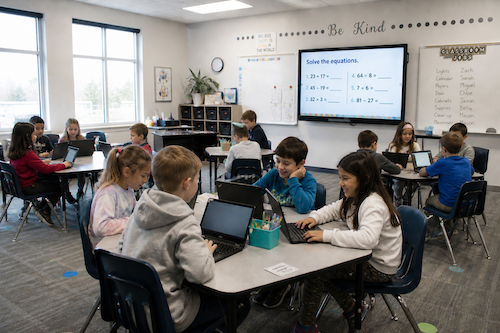
Math instruction often follows a rigid sequence that fails many students before they even engage with core content. Teachers typically introduce vocabulary, demonstrate procedures, and assign practice problems in that order. This approach creates barriers for learners whose brains process mathematical concepts differently.
Research in cognitive science reveals that students develop mathematical understanding through multiple pathways, not a single linear route. When instruction prioritizes memorizing terms and following steps before students grasp underlying concepts, anxiety and frustration build quickly. Students begin to see themselves as "not math people" before they've had genuine opportunity to learn.
The traditional model assumes all students enter the classroom with equivalent foundational knowledge and learning readiness. In reality, gaps in prior learning, different processing speeds, and varied levels of math anxiety shape how students access new material. A student struggling with basic number sense faces steeper challenges when teachers rush through conceptual foundations to reach procedural fluency.
Cognitive load theory explains why the standard sequence backfires for many learners. When students must simultaneously absorb new vocabulary, track unfamiliar procedures, and complete independent practice, their working memory becomes overloaded. This cognitive overload converts what should be accessible learning into an overwhelming experience.
Effective math instruction aligns with how brains actually learn. This means building conceptual understanding first through concrete examples, manipulatives, and visual representations. Vocabulary emerges naturally from exploration rather than serving as a prerequisite. Procedures follow once students grasp the "why" behind mathematical operations.
Teachers implementing brain-aligned approaches report improved outcomes across ability levels. Students develop genuine number sense and flexible problem-solving strategies. The shift requires rethinking pacing, materials, and assessment methods, but the payoff matters. When math instruction opens access rather than restricts it, more students experience success and develop confidence as learners.