# When STEM Lessons Are Too Easy, Students Stop Thinking
Many educators conflate busyness with learning. When students appear engaged in STEM activities, teachers often assume cognitive work is occurring. Research shows this assumption misses a critical problem: tasks that are too easy shut down thinking rather than promote it.
Students need challenge to develop deeper understanding. When STEM lessons lack appropriate difficulty, students complete activities mechanically without reasoning through concepts. They follow procedures without understanding why those procedures work. This surface-level engagement produces the illusion of learning while actual cognitive development stalls.
The challenge lies in calibrating difficulty. Tasks must stretch students beyond their current abilities while remaining within reach. This balance, called the zone of proximal development, requires teachers to diagnose what students actually know and build from there. Too-easy work bores capable learners and prevents them from wrestling with ideas.
STEM education compounds this problem. These subjects demand reasoning and problem-solving. When lessons reduce complex concepts to simple worksheets or rote activities, students miss opportunities to develop the analytical skills these fields require. A student who completes ten algebra problems without understanding the underlying principles has not learned algebra, regardless of how engaged they appeared.
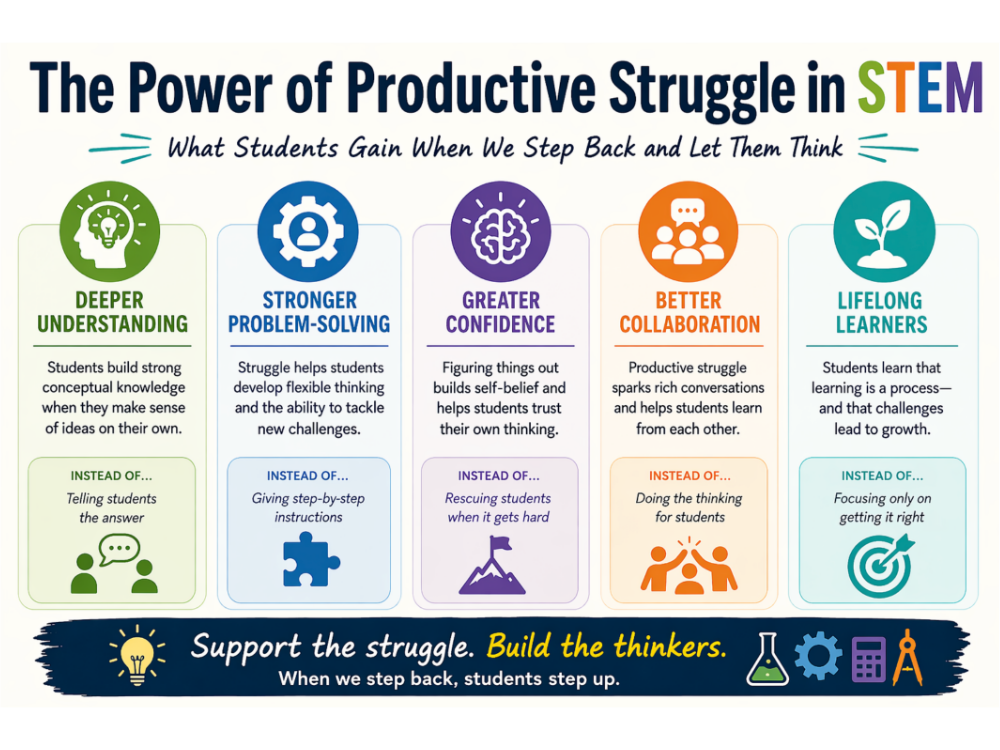
The fix requires intentionality. Teachers must design STEM lessons that demand real thinking. This means building in productive struggle, asking students to explain their reasoning, and presenting problems without clear paths to solutions. It means resisting the temptation to make lessons "fun" by removing difficulty.
Engagement matters only when it connects to intellectual work. Students staying busy is not the goal. Students thinking hard is. In STEM education, the difference determines whether graduates develop genuine problem-solving ability or simply learn to follow directions. Teachers who recognize this distinction build classrooms where challenge drives learning, not comfort.