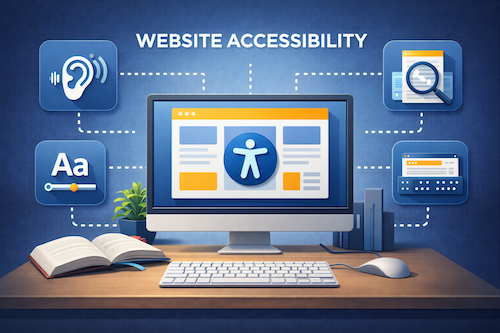
Schools face a pressing deadline to comply with updated Americans with Disabilities Act requirements for digital accessibility. The updated standards mandate that public schools ensure students, parents, and community members with disabilities can access digital content effectively.
The ADA compliance push affects multiple school operations. Districts must audit websites, learning management systems, educational apps, and online testing platforms. Content that fails accessibility standards, such as images without text descriptions, videos without captions, and documents not formatted for screen readers, puts schools at legal risk.
Schools need to prioritize several areas. Website accessibility tops the list. The Web Content Accessibility Guidelines (WCAG) 2.1 at Level AA represents the current standard. Districts should ensure their sites meet these benchmarks. Learning management systems like Canvas, Google Classroom, and Blackboard require configuration checks to enable accessibility features. Online assessments demand particular attention, since students with disabilities need equivalent testing experiences.
Document remediation requires ongoing effort. PDFs, spreadsheets, and presentations shared with families need proper tagging, alt text, and logical reading order. Automated tools can help, but manual review catches errors that software misses.
Training matters significantly. Teachers and administrators need to understand accessibility from the ground up. Creating accessible content should become standard practice, not an afterthought. Professional development programs help staff recognize barriers they might otherwise miss.
Schools lacking internal expertise can contract with accessibility consultants. Many districts have discovered that early investment prevents costly litigation and remediation later. Consultants conduct accessibility audits, identify gaps, and develop action plans.
The deadline pressure is real. Districts operating out of compliance face legal challenges from disability advocacy organizations and individual complaints. Settling these disputes costs money and staff time.
Schools serving students with disabilities understand the stakes. Digital barriers exclude students who use assistive technology. A student relying on a screen reader cannot access an image without proper description. A deaf student cannot follow video instruction