# The Global Ocean Observing System Faces Funding Threats as Climate Monitoring Becomes Critical
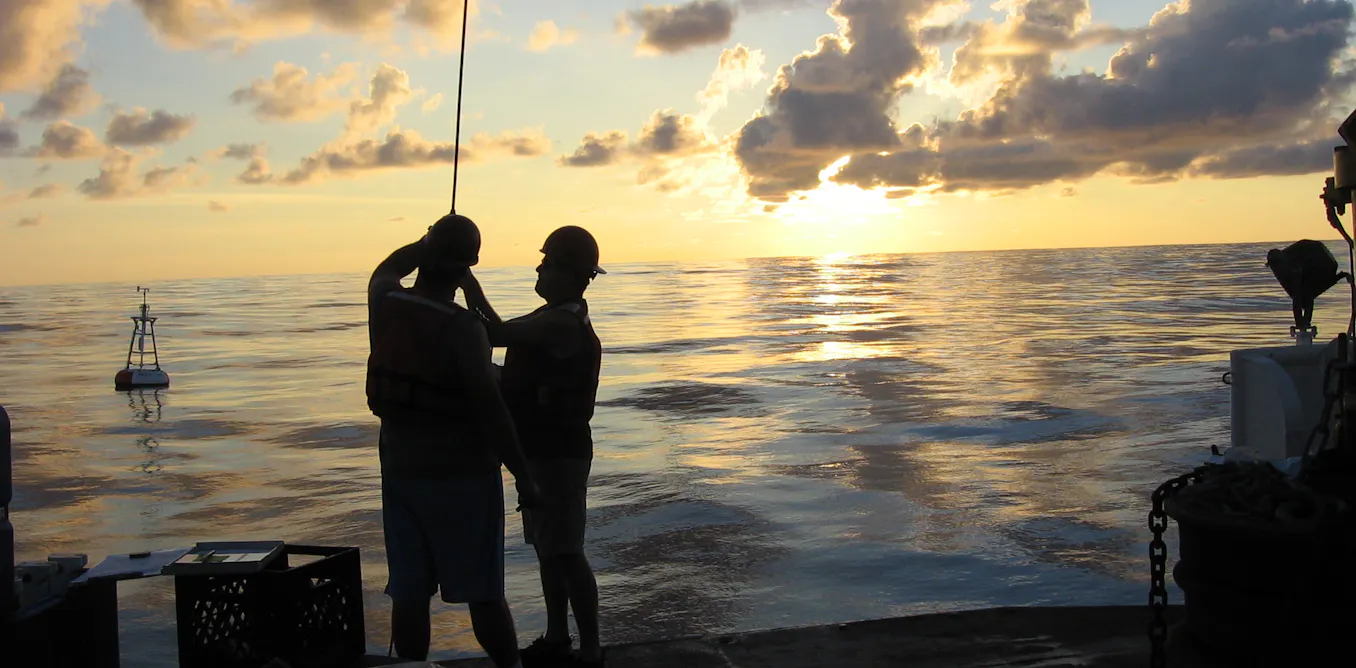
The Global Ocean Observing System, a coordinated network of satellites, buoys, and research vessels that collect ocean data worldwide, faces severe funding constraints at a moment when accurate ocean monitoring has become essential for climate science and disaster preparedness.
This system provides the foundational data for weather forecasting, hurricane prediction, and climate modeling. Governments and institutions rely on its measurements of ocean temperature, salinity, currents, and sea level to understand how oceans respond to climate change and to issue timely storm warnings. The network operates through partnerships between national weather agencies, research institutions, and international organizations across dozens of countries.
Budget pressures now threaten continuity. Some monitoring stations operate with aging equipment nearing end-of-life. Satellite missions face delays or cancellation due to competing budget priorities. Developing nations struggle to maintain their portion of ocean observation infrastructure, creating geographic gaps in data coverage, particularly in the Southern Hemisphere and tropical regions.
These gaps matter concretely. Ocean data feeds into seasonal weather forecasts that farmers, fisheries, and disaster management agencies depend on. Missing measurements degrade forecast accuracy. Climate models become less reliable without complete observational records stretching back decades. Coastal communities lose early warning capability for extreme weather.
The irony cuts deep. As ocean change accelerates due to warming and acidification, the systems designed to measure and track these shifts face underfunding. Scientists warn that data gaps create blind spots precisely when they can least afford them.
Solutions require sustained political commitment. Wealthy nations must increase funding for global observation networks. Countries must prioritize ocean monitoring infrastructure in climate adaptation budgets. International coordination mechanisms must strengthen to ensure developing nations can afford participation.
Without action, the world loses real-time understanding of ocean conditions. Weather forecasts weaken. Climate projections lose precision