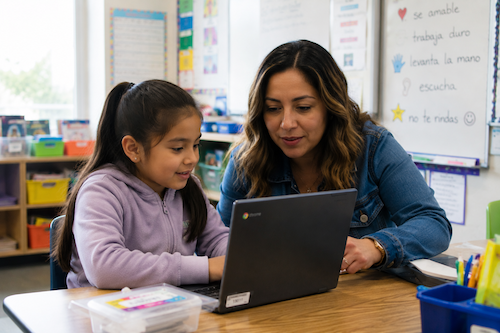
Multilingual students face a hidden barrier in American classrooms. They struggle not because they lack intelligence or content knowledge, but because schools neglect oracy—the ability to speak, listen, and communicate effectively.
Oracy bridges the gap between understanding and expression. Students who master oracy move from simply answering questions to reasoning through complex ideas. They shift from passive participation to active contribution. They find their voice.
For multilingual learners, this matters enormously. Language serves as both subject and tool. These students must simultaneously acquire English while learning math, science, and social studies through that same developing language. Without explicit oracy instruction, they fall behind not because of ability but because they lack the speaking and listening skills to access grade-level content.
The research is clear. Schools that embed oracy instruction across the curriculum see measurable gains. Students develop academic vocabulary through purposeful talk. They practice articulating thinking. They build confidence in speaking before peers and teachers. These skills transfer across subjects and boost overall academic performance.
Yet most American schools treat oracy as incidental rather than intentional. English language arts classes may touch on speaking, but comprehensive oracy instruction remains rare. Science, math, and social studies teachers often overlook their role in developing students' speaking and listening abilities.
Multilingual learners need schools to reverse this approach. When teachers deliberately teach students how to engage in academic conversations, ask clarifying questions, and build on peers' ideas, language barriers soften. Students gain access to content and develop the communication skills necessary for college and career success.
The solution requires systemic change. Teachers need training in oracy pedagogy. Curriculum frameworks must name speaking and listening standards alongside reading and writing. Assessment systems should measure oral communication, not just written output. Schools serving multilingual populations particularly benefit from this work, but all students gain when oracy becomes woven throughout instruction.
Language is power. For multil