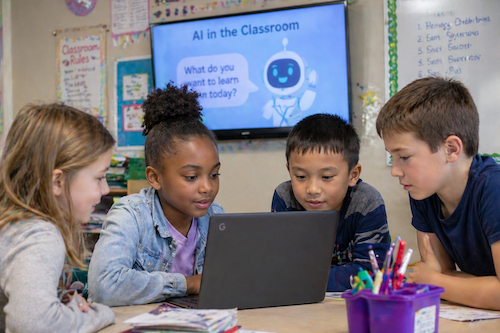
Schools across the country lack consistent policies for artificial intelligence use in classrooms, leaving individual teachers to make decisions about when and how to deploy the technology. This fragmented approach creates confusion about what AI tools students encounter and what skills they actually need to develop.
Some teachers use AI chatbots like ChatGPT for lesson planning and grading. Others ban the tools entirely to prevent student cheating. A few integrate AI into assignments, teaching students how to use it responsibly. Without district-level guidance, students in the same building learn vastly different lessons about AI literacy and academic integrity.
The absence of shared structures poses real problems. Teachers lack professional development specific to their grade level and subject. Schools cannot easily audit which AI tools students access or what data those platforms collect. Parents struggle to understand what their children are doing with technology during the school day. And students receive mixed messages about whether using AI constitutes learning or cheating.
Some districts have begun addressing this gap. They're developing AI policies that define acceptable uses, establish data privacy guardrails, and outline teacher training requirements. But adoption remains uneven. Wealthier districts with larger tech teams move faster. Rural and under-resourced schools lag behind, creating new digital divides around AI access and competency.
The stakes matter. AI literacy will shape workforce readiness in almost every field. But schools cannot teach it effectively through ad-hoc classroom decisions. Students need explicit instruction on how to use AI tools, when they're appropriate, and how to think critically about AI-generated output. Teachers need time and support to design that instruction.
As AI tools become more sophisticated and more common in education, schools face a choice. They can continue letting individual teachers navigate the technology alone, or they can build intentional, transparent systems that treat AI as a core literacy skill. Right now, most are doing neither.