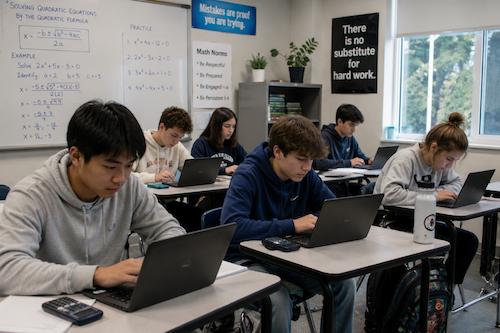
A new survey reveals that 68 percent of students use AI tools when they need extra help with math assignments and exams. The finding underscores how artificial intelligence has become a routine part of student study habits, particularly among high performers.
The survey indicates AI serves a supportive function in math learning rather than replacing traditional instruction. Students turn to these tools for assistance on specific problem sets and exam preparation. The data suggests AI adoption cuts across student performance levels, though the survey specifically tracked responses from top-performing students.
The trend reflects broader classroom shifts. Schools nationwide grapple with how to regulate AI use while acknowledging its presence in student workflows. Some districts implement AI literacy curricula and establish clear guidelines for when and how students can use these tools. Others ban them outright from classrooms and assessments.
Math instruction presents particular challenges and opportunities. AI tools like ChatGPT and specialized platforms can walk students through problem-solving steps, explain concepts, and generate practice problems. When used appropriately, this personalized scaffolding can reinforce learning. When misused, it enables academic dishonesty.
Educators debate the implications. Some see AI as a digital tutor that provides feedback 24/7 to students who lack access to private tutoring. Others worry that students develop dependency on AI rather than building math fluency and resilience through struggle and practice. The distinction between helpful support and shortcut-taking remains fuzzy in many classrooms.
The survey does not specify which AI tools students favor or how teachers perceive student AI use. It also lacks demographic breakdowns that would show whether AI adoption varies by grade level, school type, or student background.
These findings arrive as schools finalize AI policies for the next academic year. Districts increasingly recognize they cannot simply prohibit AI. Instead, many pivot toward teaching students when and how to use these tools responsibly. For math instruction specifically, educators explore frameworks that position