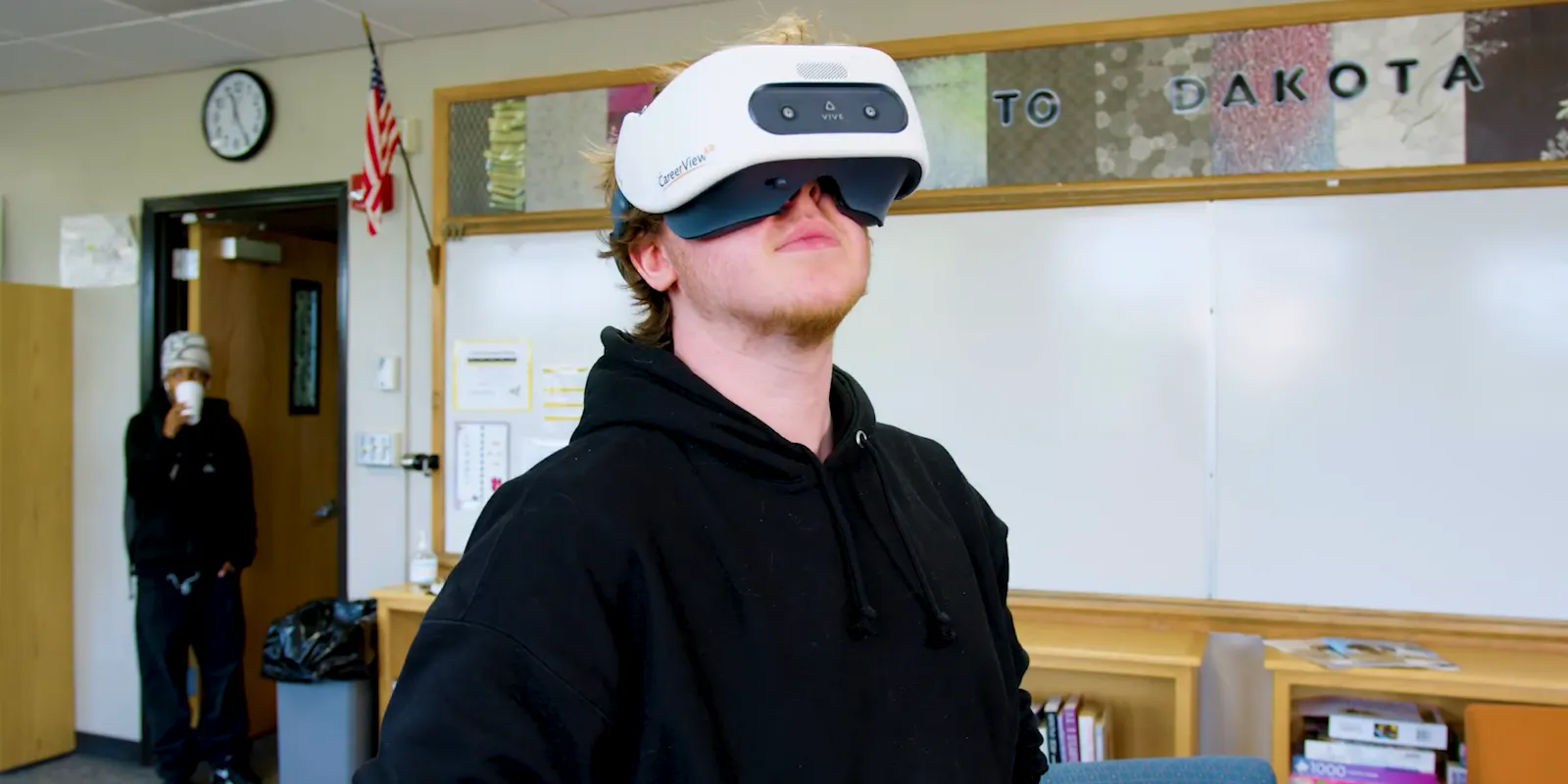
# VR Gives North Dakota Kids an Early Career Jump Start
North Dakota schools are deploying virtual reality to expose students to real-world careers before they graduate. The immersive technology places students inside wind turbines, emergency rooms, and mechanic shops, letting them experience high-demand jobs firsthand.
The initiative addresses a concrete workforce problem. North Dakota faces critical shortages in skilled trades, healthcare, and energy sectors. By letting students preview these careers through VR, schools reduce the guesswork in vocational planning and build familiarity with technical work environments.
VR career simulations offer advantages traditional job shadowing cannot match. Students can safely explore dangerous environments like turbine heights and surgical settings without liability concerns. They can repeat experiences to build confidence, pause to ask questions, and access content regardless of local employer availability. In rural North Dakota, where students may live far from major employers, VR eliminates geographic barriers to exposure.
The approach connects to broader education trends. Career and technical education (CTE) programs nationwide increasingly adopt immersive tools to boost enrollment and completion rates. Virtual simulations let students test aptitude before committing to multi-year training programs, reducing dropout costs for schools and wasted time for students.
Implementation details matter. Success depends on quality content tied to actual job requirements, teacher training on VR tools, and integration with existing CTE curricula rather than treating VR as a standalone novelty. Schools must also ensure devices reach students in under-resourced districts.
Early adopters report positive outcomes. Students show higher engagement with career exploration when using VR compared to videos or classroom presentations. Employers appreciate graduates who arrive with baseline familiarity with equipment and workplace norms.
North Dakota's push reflects a pragmatic approach to workforce development. Rather than waiting for students to discover careers through trial and error, VR lets them sample pathways early. For a state competing for talent