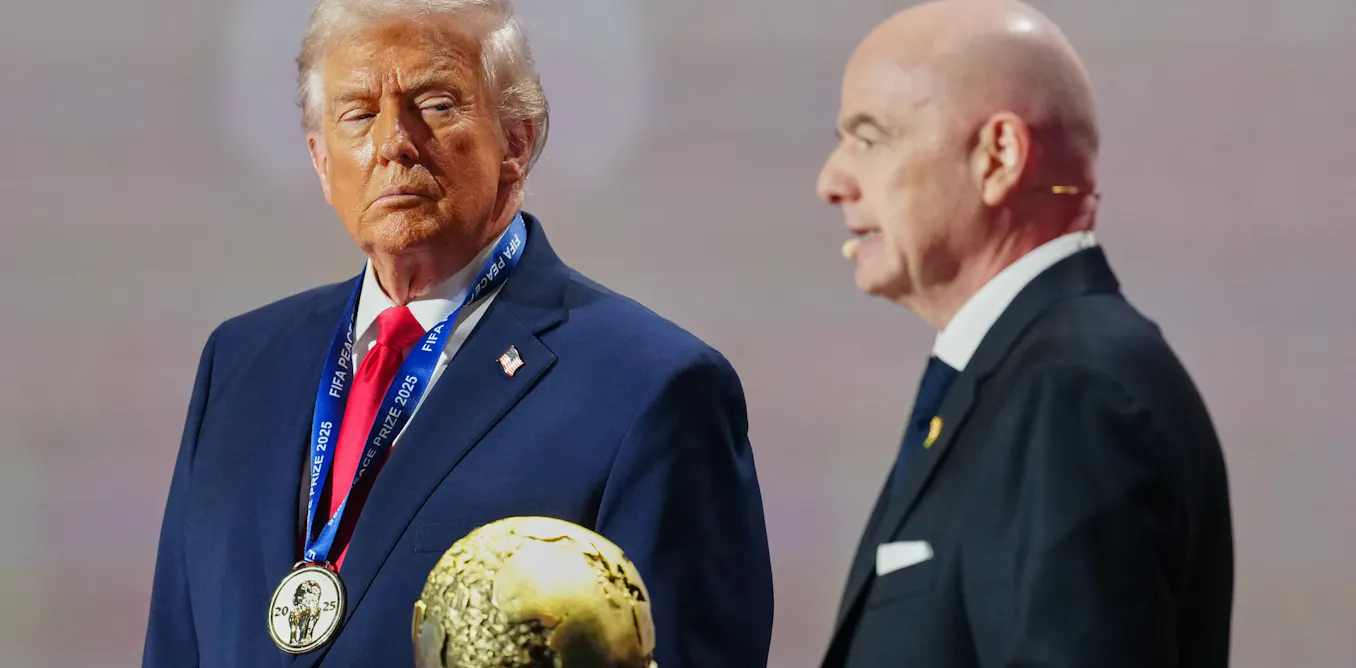
The 2026 FIFA World Cup, set to take place in the United States, brings together two entities with overlapping interests in profit and power. Donald Trump and FIFA leadership share a transactional approach to major global events, prioritizing financial gain and political leverage over ethical concerns.
FIFA's history of awarding tournaments to nations with documented human rights abuses, labor exploitation, and corruption sets a pattern that continues with the U.S. hosting decision. Trump's business model, built on real estate deals and brand promotion, aligns with FIFA's willingness to overlook ethical concerns when financial incentives align. Both operate in spheres where legal accountability remains minimal and where prestige and revenue generation drive decisions.
The 2026 World Cup presents specific concerns for American communities. Tournament hosting typically requires massive infrastructure investment, stadium construction, and security spending that often displaces local residents and diverts public resources. Trump's involvement in real estate development around World Cup venues could create conflicts of interest and opportunities for personal enrichment tied to the event.
FIFA faces renewed scrutiny over labor conditions, environmental impact, and community displacement in host nations. The organization's track record includes inadequate worker protections during construction, insufficient environmental safeguards, and limited benefit sharing with affected local populations. These patterns emerged prominently during the 2022 Qatar World Cup, where migrant worker deaths and exploitation drew global criticism.
For American education and communities, the 2026 tournament raises questions about public spending priorities. Resources directed toward World Cup infrastructure often come from budgets that support schools, housing programs, and social services. The article suggests that without stronger ethical frameworks and accountability mechanisms, the tournament will reflect the values of its two primary stakeholders: organizational profit maximization and individual political gain.