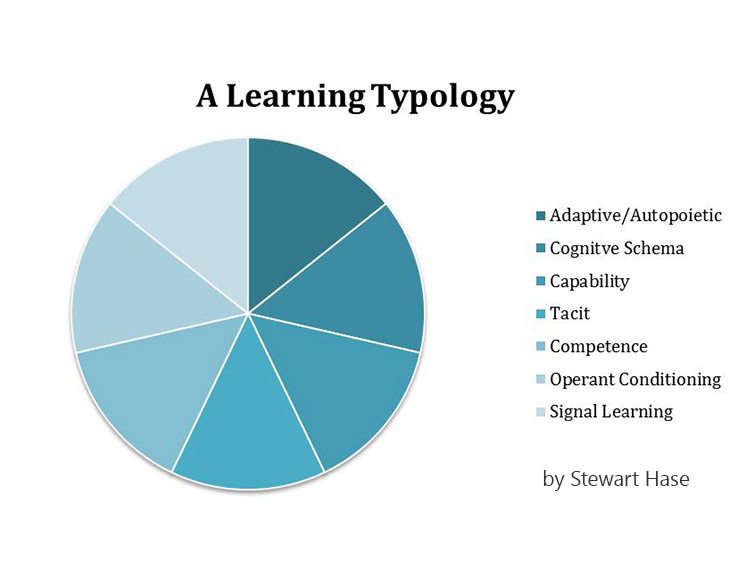
# A Learning Typology: 7 Ways We Come To Understand
TeachThought has released a learning typology that identifies seven distinct pathways through which people acquire understanding. The framework distinguishes itself as a typology rather than a taxonomy, meaning it organizes learning modes by their fundamental characteristics rather than ranking or classifying them hierarchically.
A typology focuses on types and patterns of how learning actually occurs, while a taxonomy arranges items in ordered categories. This distinction matters for educators. A typology recognizes that different learners genuinely process information through different channels, without suggesting one method ranks above another.
The seven learning pathways described in the framework address how understanding develops across different cognitive, sensory, and experiential dimensions. The resource acknowledges that learners rarely rely on a single pathway. Most students combine multiple modes simultaneously, switching between them based on content, context, and personal preference.
This framework serves teachers planning instruction and curriculum designers building learning experiences. Instead of treating students as fitting into boxes, the typology invites educators to recognize the variety of legitimate routes to understanding. A student might grasp mathematical concepts through visual representation, another through kinesthetic problem-solving, a third through verbal explanation and discussion.
The distinction between typology and taxonomy reflects broader shifts in learning science away from rigid categorization systems. Older models like the VARK framework (visual, auditory, reading/writing, kinesthetic) attempted to sort learners into learning styles. Research has increasingly questioned whether learners are truly fixed in single styles. The typology approach sidesteps this debate by describing how understanding actually unfolds across multiple dimensions.
Educators applying this framework can design lessons that naturally invite multiple pathways simultaneously. A science experiment engages visual observation, kinesthetic manipulation, and often verbal reasoning. Rather than labeling students, the approach supports flexible instruction that acknowledges humans learn in varied and overlapping ways.
Te