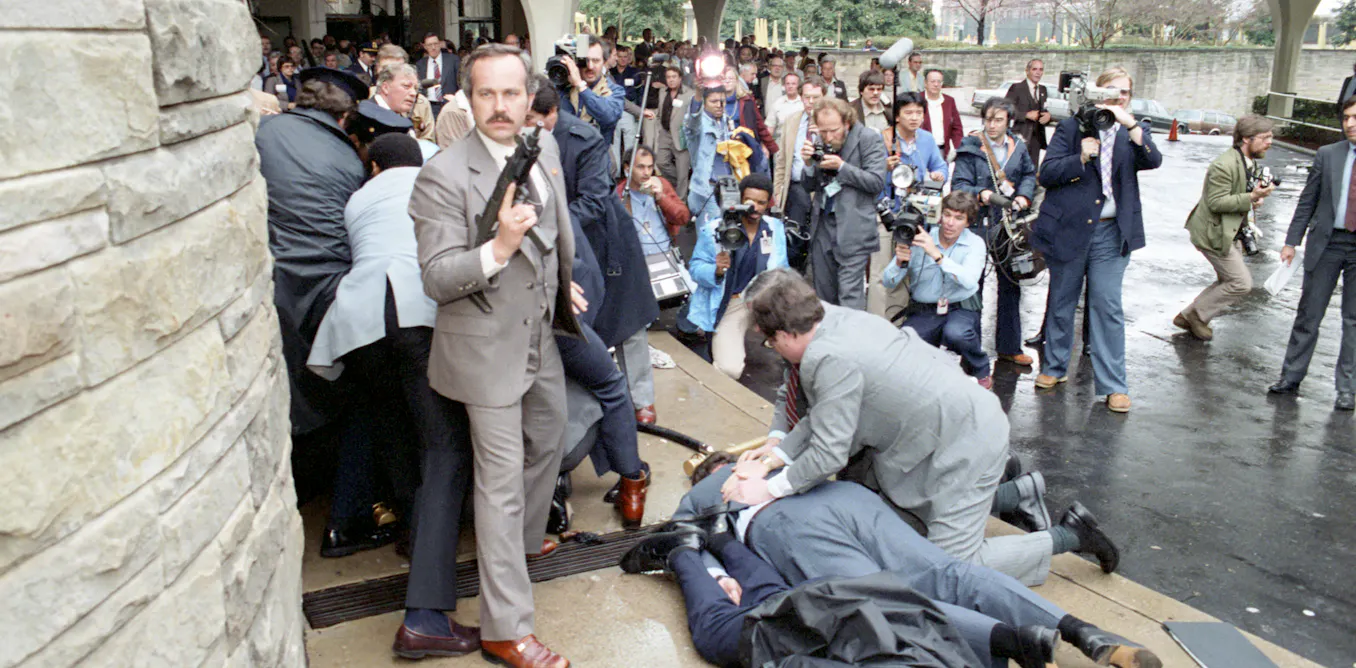
# Two Presidential Assassination Attempts, One Washington Hotel
The Hilton Hotel in Washington D.C. has become an unlikely marker of American political violence. On March 30, 1981, John Hinckley Jr. shot President Ronald Reagan outside the hotel's main entrance, wounding the president and three others. On July 13, 2024, Thomas Matthew Crooks fired at former President Donald Trump during a campaign rally near the same location, missing the candidate but killing a rally attendee.
These attempts, separated by 43 years, raise questions about the nature of political violence in America and what patterns emerge when such acts occur at identical locations. The Hilton serves as more than a backdrop. It sits in a city where major political figures congregate, make speeches, and conduct business. Both incidents involved shooters with documented mental health concerns and ideological fixations.
The Reagan shooting occurred during a period of heightened Cold War tensions and intense political polarization. Hinckley's motivations centered on personal obsessions rather than organized political ideology. The Trump incident happened amid a period of deep partisan division and widespread concerns about election integrity.
Security protocols have evolved dramatically between 1981 and 2024. Modern protective details now employ advanced surveillance, threat assessment teams, and coordinated law enforcement responses. Yet both incidents demonstrate that determined individuals can still pose serious risks despite these precautions.
The Hilton's historical significance lies not in the building itself but in what these incidents reveal about American democracy under stress. When violence becomes a recurring mechanism through which power is tested or challenged, it reflects deeper fractures in civic institutions. The proximity of these events across decades suggests that certain locations and moments attract dangerous attention. Understanding this pattern matters for security planning, threat prevention, and addressing the underlying conditions that motivate political violence. The conversation about why the Hilton became this historical marker deserves attention from p