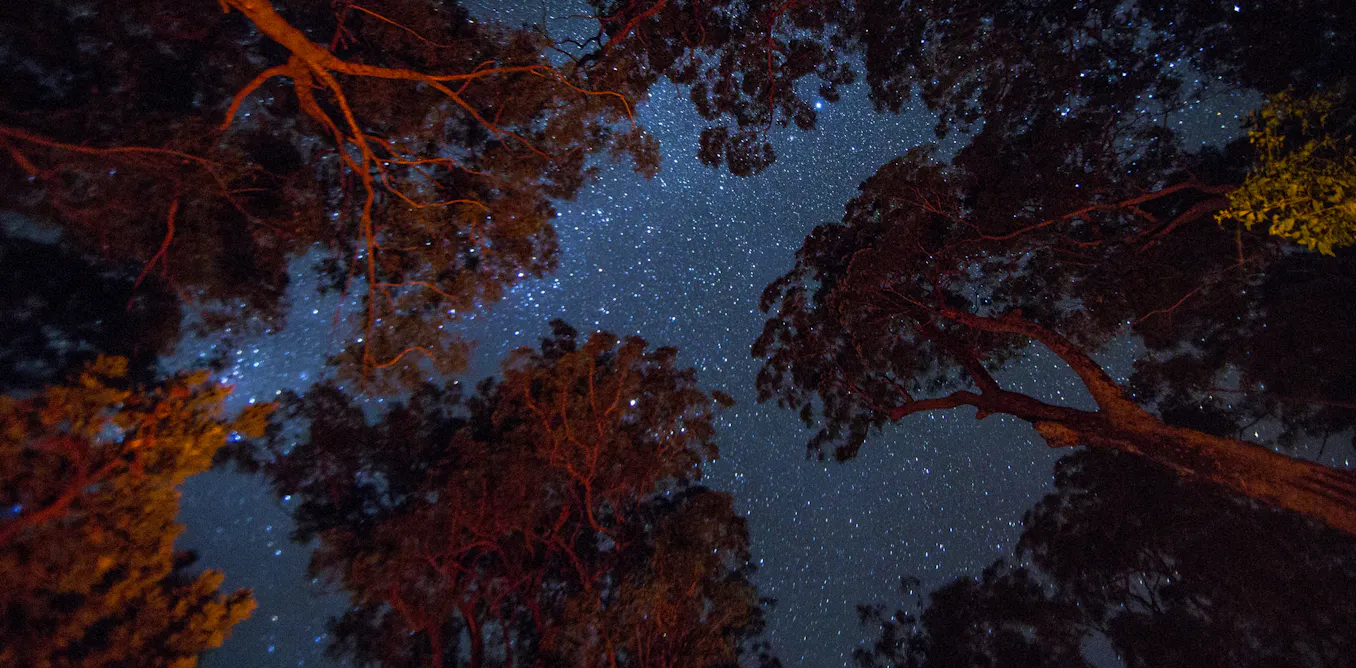
Indigenous Australians developed sophisticated astronomical knowledge spanning at least 65,000 years, tracking celestial patterns that governed seasons, navigation, and cultural practices. This knowledge system rivals the complexity of astronomy developed in other ancient civilizations, yet remains largely unknown outside Aboriginal communities.
The threat comes from light pollution. As Australian cities expand and infrastructure development accelerates, artificial light drowns out the stars. Aboriginal communities lose access to the night sky that anchored their cultural and practical knowledge systems for millennia. Light pollution obscures the constellations, planets, and stellar movements that Indigenous peoples used to predict seasonal changes, guide navigation across the continent, and maintain spiritual and educational traditions.
The risk extends beyond cultural loss. Western science stands to lose valuable astronomical observations and methods. Aboriginal astronomical knowledge incorporates detailed records of celestial events, star positions, and planetary movements documented across generations. This knowledge could strengthen modern astronomical research and provide alternative frameworks for understanding the cosmos.
Several Aboriginal communities have begun documenting their astronomical heritage before the knowledge disappears. The Wurdi Youang stone arrangement in Victoria, constructed over 4,000 years ago, aligns with solstice sunrises and sunsets, demonstrating the precision of Indigenous astronomical practice. Similar sites exist across Australia, though many remain unstudied or unprotected.
Efforts to preserve this knowledge face practical obstacles. Funding for documentation remains limited. Access to traditional lands for observation becomes difficult as development continues. Younger generations face reduced opportunities to learn directly from country and elders.
Some researchers and Aboriginal leaders advocate for recognition of Indigenous astronomy in school curricula and for stricter light pollution regulations in areas near Aboriginal communities. Organizations working with Indigenous groups push for community-led initiatives that center Aboriginal voices in preservation efforts rather than imposing external research frameworks.
The challenge balances development with preservation. Australia has an opportunity to protect one of humanity's oldest scientific traditions while enriching modern astronomy