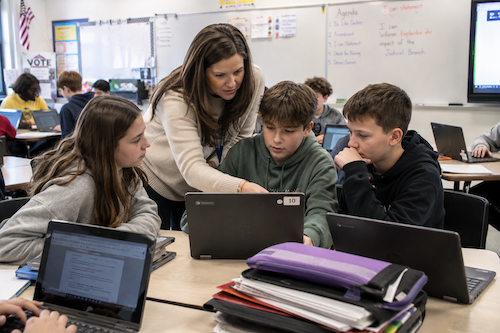
Illinois educators are developing statewide guidance for artificial intelligence use in schools, recognizing that AI tools already shape how students learn. Teach Plus Illinois is leading efforts to ensure that policy reflects classroom realities rather than theoretical concerns.
The organization emphasizes three core principles for responsible AI integration. First, guidance must ground itself in what actually happens in classrooms. Teachers encounter AI daily through student research tools, automated grading systems, and generative platforms. Policies that ignore these realities will fail to address real problems or unlock genuine benefits.
Second, Illinois educators insist that teacher leaders drive these decisions. Classroom practitioners understand how AI affects instruction, assessment, and student engagement in ways policymakers often miss. Empowering teachers to shape AI guidance ensures policies remain practical and implementable.
Third, any framework must prioritize human connection. AI handles logistics and routine tasks, but learning depends on relationships between teachers and students. Guidance should protect instructional time and ensure technology serves, not replaces, meaningful interaction.
Illinois joins other states wrestling with AI policy. Some districts have banned generative AI outright; others integrate it into curriculum. The challenge is finding middle ground, one that harnesses AI's analytical power while protecting academic integrity and student development.
The stakes extend beyond Illinois. As AI tools proliferate, schools nationwide face identical questions: How do we teach critical thinking when students can generate essays instantly? How do we assess learning fairly? How do we prepare students for workplaces where AI collaboration is standard?
Teach Plus Illinois recognizes that blanket restrictions ignore how students already use these tools outside school. Conversely, unrestricted use without clear norms invites misuse. Thoughtful guidance, built by teachers and rooted in evidence, offers a more sustainable path forward.