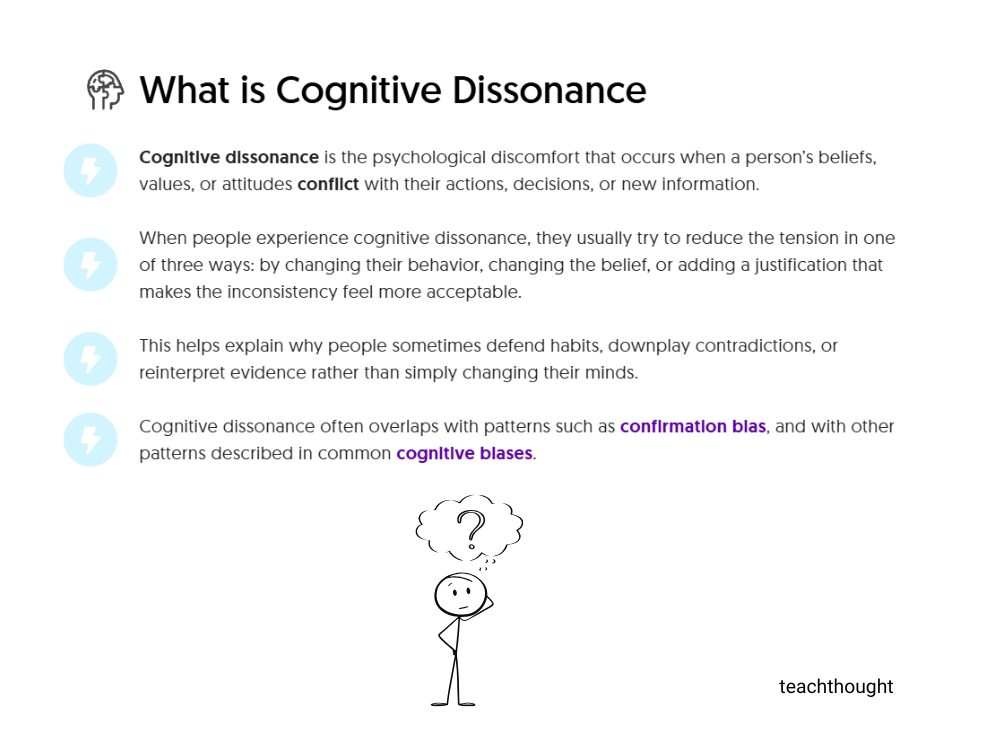
Cognitive dissonance describes the mental discomfort people experience when holding contradictory beliefs, values, or attitudes simultaneously. This psychological concept, rooted in social psychology research, plays a meaningful role in educational settings and learning environments.
When students encounter information that conflicts with their existing worldviews, they often experience cognitive dissonance. A student who believes climate change is not real but learns scientific evidence suggesting otherwise faces this tension. The brain registers the conflict and pushes toward resolution, either by accepting new information, rejecting it, or finding ways to reconcile both positions.
Understanding cognitive dissonance matters for educators designing curriculum. Teachers can leverage this discomfort as a learning tool. When students sit with contradiction rather than dismiss it, deeper thinking emerges. Effective instruction sometimes involves presenting competing perspectives or evidence that challenges students' assumptions, creating productive discomfort that drives engagement.
The concept also explains student resistance. When new material conflicts sharply with home beliefs or family values, students may shut down rather than process the tension. Recognition of this dynamic helps teachers approach sensitive topics with intentionality, creating psychological safety that allows students to explore contradictions without feeling attacked.
Research in learning sciences shows that moderate cognitive dissonance supports retention and conceptual change. Too little dissonance produces shallow learning. Too much creates anxiety that blocks thinking. The sweet spot occurs when students feel challenged but supported, with clear pathways toward resolving the conflict.
In classroom practice, this translates to specific strategies. Socratic questioning helps students discover contradictions in their own reasoning. Debate formats expose students to opposing arguments. Primary source analysis reveals how historical figures held conflicting ideas. These approaches activate cognitive dissonance productively.
Parents and educators should recognize that student discomfort with new ideas does not indicate failure. It signals learning is happening. The goal is not elimination of dissonance but skillful navigation through it, building students'