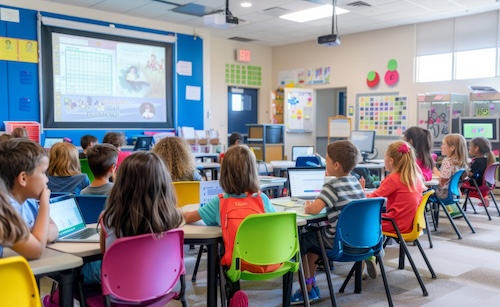
Schools have doubled their reliance on digital devices over the past four years, with roughly 80 percent of K-12 students now using computers or tablets during the school day. This represents a jump from 50 percent before the pandemic, marking a fundamental shift in how classrooms operate.
The expansion raises a pressing question: Do teachers have the training and support to use these tools effectively?
The rapid adoption of technology has outpaced many schools' ability to prepare educators. Teachers need more than access to devices. They require ongoing professional development on pedagogy that integrates technology, classroom management in digital environments, and strategies for addressing equity gaps that can emerge when students have unequal access to devices or internet at home.
Districts face budget pressures when scaling professional development. Many schools rolled out devices quickly to meet remote learning demands during pandemic closures but did not simultaneously invest in teacher training. The result leaves educators navigating unfamiliar tools while managing traditional workloads.
Parents express concern about screen time and its impact on learning and child development. Research shows mixed results. Digital tools can personalize instruction and expand access to resources, but overuse without clear pedagogical intent risks distraction and reduced engagement. The key lies in how schools implement technology, not the technology itself.
Schools that succeed with digital learning establish clear policies about when and how technology serves learning objectives. Teachers receive sustained training not as a one-time workshop but as embedded support throughout the school year. Curriculum design intentionally incorporates digital tools to enhance critical thinking and collaboration rather than replace traditional instruction.
Equity remains unresolved. Students without reliable home internet or personal devices fall behind peers when assignments move online. Schools must ensure digital access does not become a new dividing line between well-resourced and under-resourced districts.
The question for educators is not whether to use digital tools but how to use them purposefully. Professional development, clear policies, and sustained