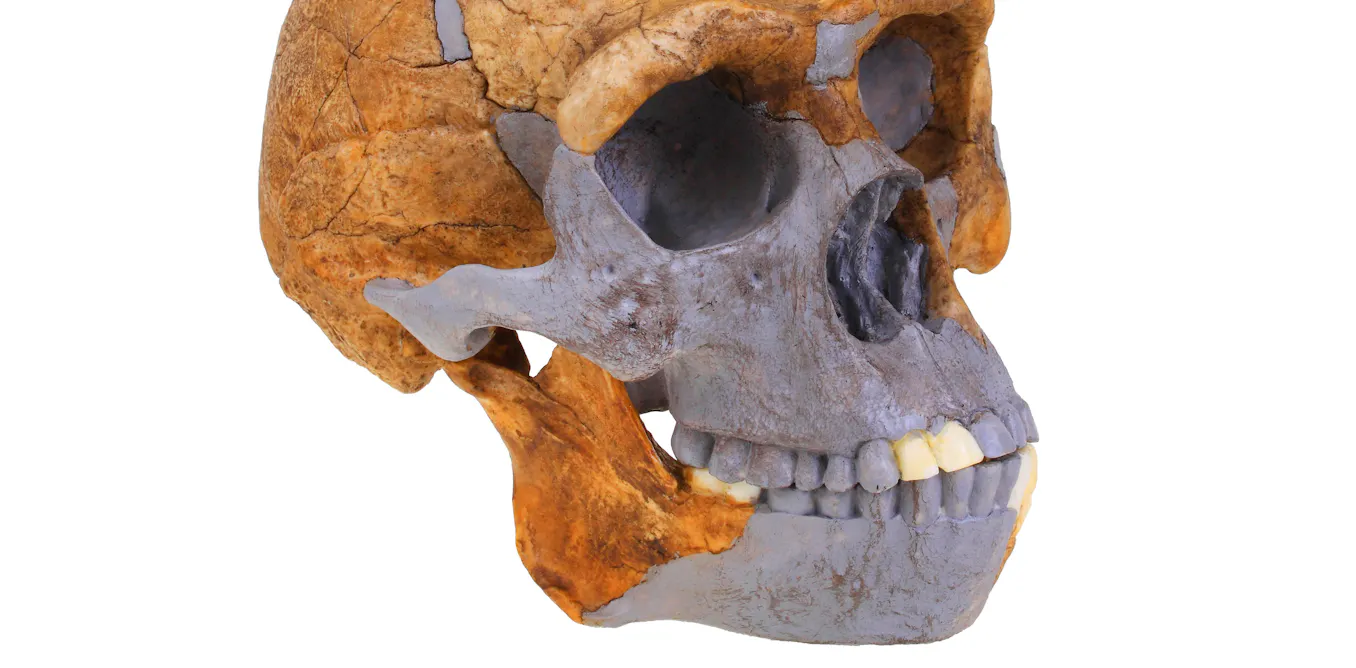
Scientists analyzing ancient tooth proteins from Homo erectus specimens in China have found evidence that this extinct human species may have passed genes to modern populations in East Asia.
Researchers extracted and studied proteins preserved in teeth dating back roughly one million years. The protein analysis revealed genetic signatures suggesting that Homo erectus interbred with other human lineages before disappearing. This contradicts earlier assumptions that Homo erectus represented a purely evolutionary dead end with no contribution to contemporary human populations.
The findings align with growing genetic evidence from other ancient hominin species. Previous DNA studies of Neanderthals and Denisovans demonstrated that these extinct human relatives also interbred with anatomically modern humans, leaving detectable genetic traces in living populations. The new tooth protein work extends this pattern to Homo erectus, one of the earliest human species to leave Africa approximately two million years ago.
Homo erectus thrived across Asia, Europe, and Africa for more than a million years before vanishing around 100,000 years ago. The species showed remarkable adaptability, developing stone tools, controlling fire, and constructing shelters. Its long survival and geographic spread made extensive interbreeding with other human populations plausible.
Researchers note that protein analysis offers advantages over DNA extraction when working with extremely ancient specimens. Proteins preserve longer than DNA under challenging environmental conditions, allowing scientists to recover genetic information from fossils that might otherwise yield no useful molecular data.
The research carries implications for understanding human evolutionary history in Asia. Rather than viewing human evolution as a simple linear progression, scientists increasingly recognize it as a complex branching process involving multiple overlapping species. Modern East Asian populations may carry genetic variants inherited from these ancient encounters, influencing traits from disease resistance to metabolism.
Further research combining protein analysis with other archaeological and genetic approaches will help clarify the extent of Homo erectus ancestry in contemporary populations and identify which specific traits may trace back to this