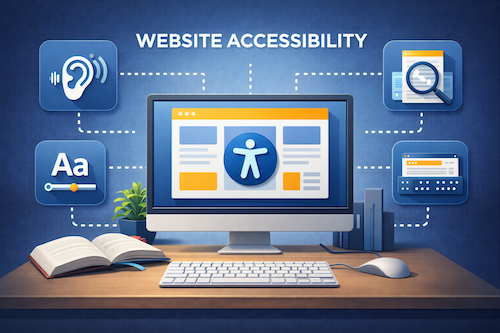
# Schools Face New ADA Digital Accessibility Requirements
The Americans with Disabilities Act has updated its digital accessibility standards, and public schools now operate under tightened compliance deadlines. Schools must ensure students, parents, and community members with disabilities can access online content and services effectively.
These requirements apply to school websites, learning management systems, digital documents, and educational platforms. Inaccessible content—missing alt text on images, videos without captions, PDFs that screen readers cannot parse—blocks students with visual, hearing, and mobility disabilities from equal educational access.
Schools typically struggle with three compliance areas. First, many websites and apps do not meet Web Content Accessibility Guidelines (WCAG) 2.1 Level AA standards, which set the baseline for readable fonts, color contrast, keyboard navigation, and logical page structure. Second, educational software purchased from vendors often ships without accessibility features built in. Third, staff lack training to create accessible documents and course materials from the start.
Districts should conduct a full audit of digital assets now. This includes testing websites with screen readers, reviewing how videos are captioned, and checking whether PDFs include proper tagging. Many schools discover widespread problems only after complaints arrive or lawsuits file.
Remediation takes time and money. Schools need to budget for vendor updates, staff training, and possibly hiring accessibility consultants. Some districts have faced settlements costing hundreds of thousands of dollars after failing to comply voluntarily.
The deadline pressure is real. Schools operating in federal noncompliance risk losing federal funding and facing civil rights investigations. More practically, students with disabilities deserve the same digital access their peers enjoy. A student who cannot read an inaccessible PDF or watch a video without captions falls behind academically through no fault of their own.
Schools should start now by assigning accountability. Designate an ADA compliance coordinator, establish processes for accessible procurement, and train teachers to