# Trump's Beijing Visit Carries Symbolic Weight Through Venue Choices
President Donald Trump's recent visit to Beijing used carefully selected locations to communicate messages about American power and Chinese tradition, according to a cultural historian of modern China.
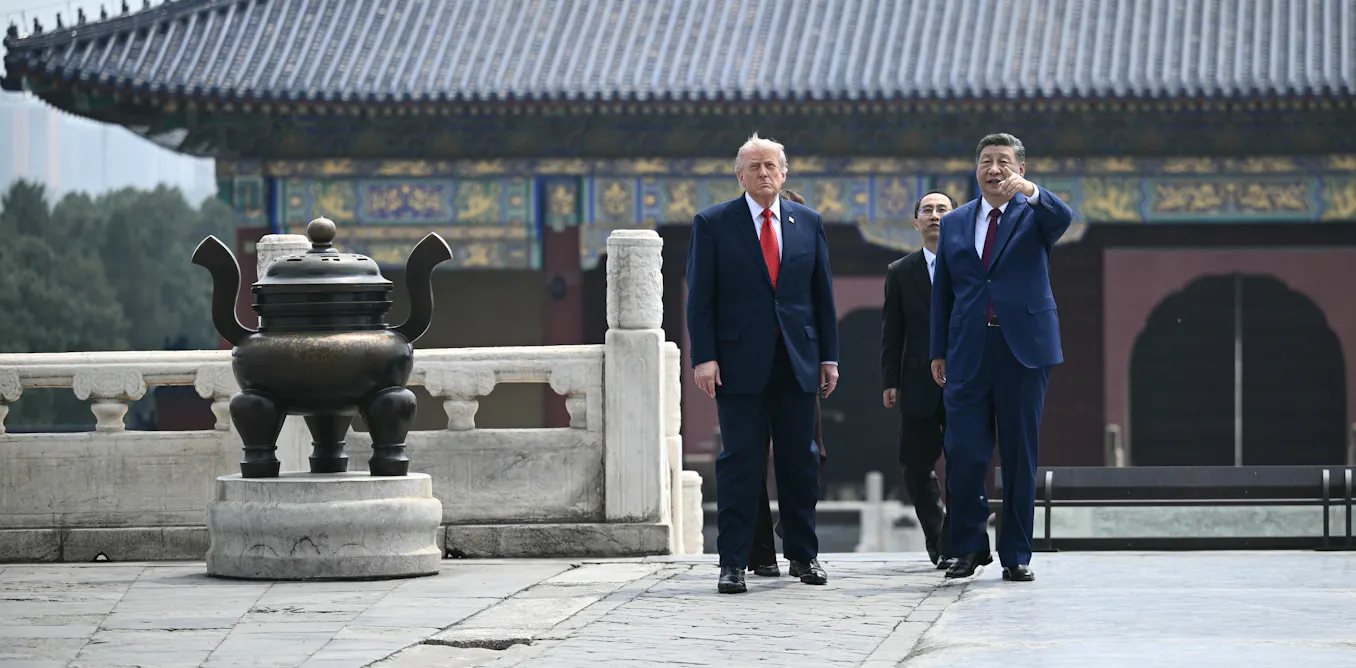
The venue choices reflected a deliberate diplomatic strategy. Trump's dining experience, which included beef ribs, signaled American influence and comfort within Chinese spaces. Simultaneously, his walk through historically significant Chinese sites reinforced respect for Chinese cultural heritage and the nation's long historical continuity.
Cultural historians note that diplomatic summits extend beyond policy discussions. The physical spaces where leaders meet, eat, and walk send messages to domestic audiences and the international community. Selecting venues that blend both nations' values creates visual narratives that photographs and media coverage amplify globally.
China's approach to hosting major diplomatic events typically emphasizes historical sites that underscore the nation's ancient civilization and continuous governance. The "heavenly" walk referenced in the summit coverage likely invoked traditional Chinese cosmology and architectural symbolism. These choices position China within a framework of timeless authority and cultural sophistication.
For American audiences, Trump's comfort in these spaces and participation in Chinese cultural settings demonstrated engagement while maintaining American distinctiveness. The beef ribs reference speaks to maintaining familiar comforts even abroad, a subtle assertion that American tastes and preferences remained intact.
Diplomatic venues operate as stages where symbolism matters as much as policy. The selection of locations during high-level summits influences how both domestic populations and international observers interpret bilateral relationships. By choosing sites that honored both traditions, both nations attempted to project strength rooted in their distinct histories while suggesting mutual respect.
These symbolic gestures rarely change policy outcomes directly. However, they shape the narrative environment surrounding negotiations and help leaders justify diplomatic positions to their home constituencies. Trump's Beijing visit demonstrated how geography, architecture, and cultural references become tools in statecraft.