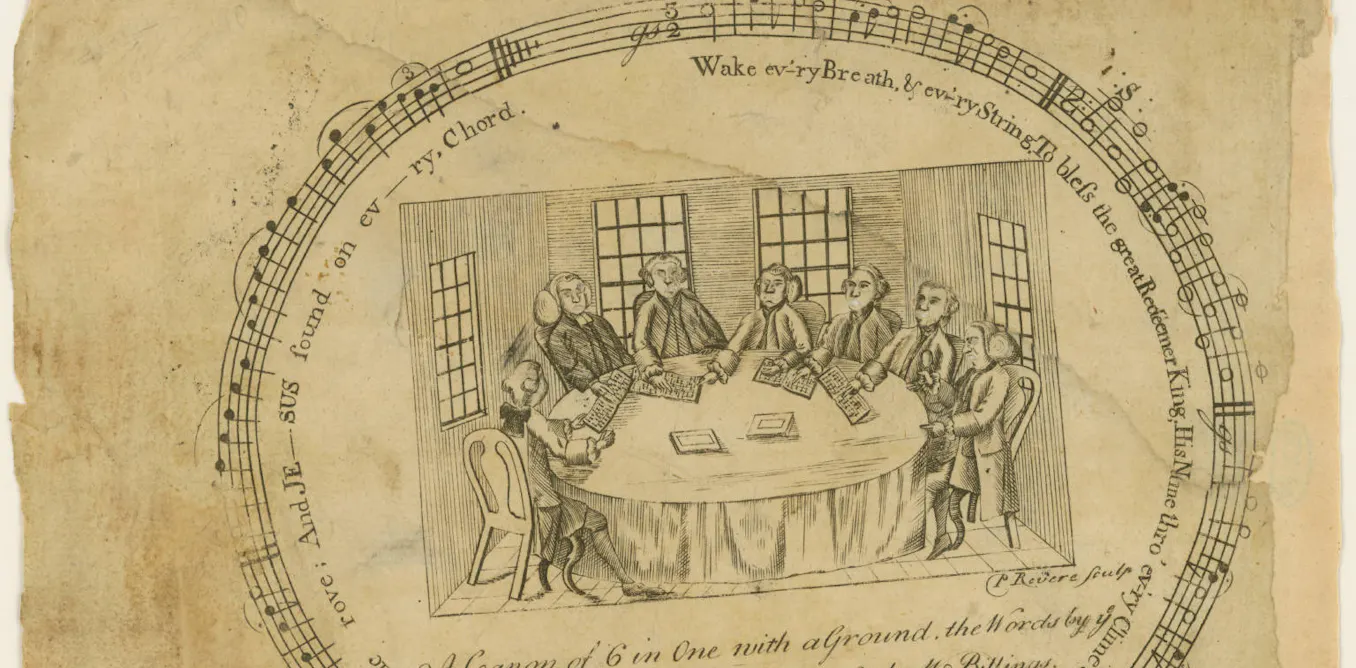
William Billings, an 18th-century Boston tanner and self-taught musician, composed patriotic songs that galvanized colonial resistance to British rule, yet his legacy fades from public memory outside academic circles.
Billings emerged as America's first significant composer during the 1770s, a period when the colonies prepared for revolution. He wrote "Liberty Songs" and other protest compositions that spread through taverns, churches, and community gatherings, amplifying anti-British sentiment among ordinary colonists. His music gave voice to revolutionary ideology when pamphlets and newspapers reached only a fraction of the population.
Born in Boston in 1746, Billings received no formal musical training. He taught himself composition and became a versatile musician who sang, played instruments, and arranged music for others. His lack of formal credentials made his success unusual for the era, yet his work resonated deeply with colonists seeking emotional outlets for political frustration.
Billings' compositions used simple melodies and direct language. His songs addressed taxation without representation, the Boston Massacre, and other grievances that sparked outrage. By embedding revolutionary messages in music, Billings created a form of protest accessible to literate and illiterate colonists alike. Singing became an act of political participation.
His influence extended beyond the Revolution. Billings published several collections of sacred and secular music that defined American musical taste for decades. He helped establish a distinctly American musical tradition independent from European forms.
Despite his historical importance, Billings faded from educational curricula and popular knowledge. Music history courses often skip from European composers directly to 19th-century American figures. Textbooks rarely mention him alongside other founding-era figures, though his songs mobilized communities as effectively as written propaganda.
Recent scholarship in music history has revived interest in Billings, recognizing that cultural production shapes political movements. His story matters to