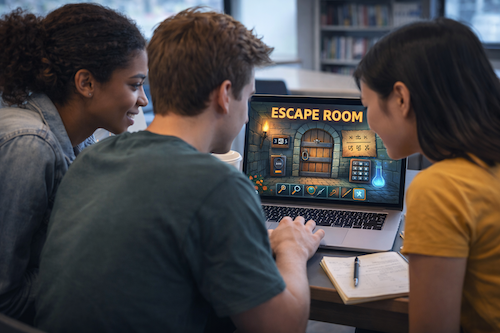
Escape rooms have emerged as a teaching tool that engages students through collaborative problem-solving and critical thinking. Educators looking to translate the escape room experience into classroom learning can follow five key principles to maximize educational impact.
The first principle involves alignment with curriculum standards. Teachers should design escape room puzzles and challenges that directly support learning objectives rather than treating the activity as pure entertainment. This ensures students work toward specific academic goals while solving problems.
Second, educators must emphasize collaborative teamwork. Escape rooms force students to communicate, delegate tasks, and leverage each team member's strengths. This peer interaction builds social-emotional skills alongside content knowledge.
Third, designers should integrate the Engineering Design Process and Process of Scientific Inquiry into puzzle construction. These frameworks transform escape rooms from random challenges into structured learning experiences where students apply real problem-solving methodologies used by professionals in STEM fields.
Fourth, teachers need to scaffold difficulty levels appropriately. Puzzles that prove too simple bore students, while those that are too difficult create frustration. Gradual increases in complexity maintain engagement while building confidence as students progress through the activity.
Fifth, incorporating meaningful debriefing sessions after the escape room activity solidifies learning. Teachers should facilitate reflection on what students discovered, how they approached problems, and what strategies proved effective. This metacognitive step transforms experiential activity into documented learning.
Escape rooms work best when designed intentionally rather than imported wholesale from commercial vendors. Teachers who treat the experience as a structured learning activity rather than a novelty game see stronger outcomes. Students retain problem-solving strategies longer when they understand why specific puzzles connect to their curriculum. The escape room format naturally encourages peer teaching, as students explain logic to teammates who may think differently about a challenge. When designed with these five principles in mind, escape rooms become a classroom tool that motivates while teaching students how to think, not just what to think.