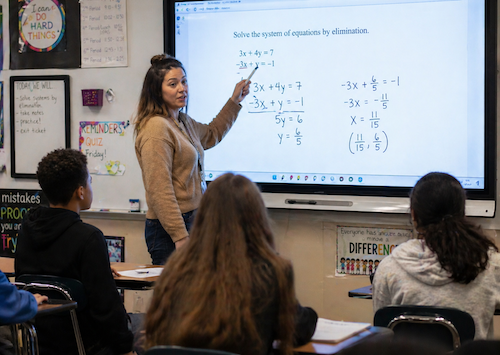
District leaders looking to improve math outcomes need to prioritize teacher confidence as a foundation for change, according to educators with decades of classroom experience. A high school math teacher with 20 years in the classroom discovered that professional learning focused on foundational math concepts transformed their understanding of student struggles, suggesting that targeted teacher development works.
Teacher confidence directly shapes classroom culture and student learning. When teachers feel uncertain about math content or pedagogy, that anxiety transmits to students. Districts that invest in quality professional development see shifts in how math instruction feels to both teachers and learners, moving from anxiety-driven to positive experiences.
Four key lessons emerge for district leaders building teacher confidence. First, professional learning must address gaps in foundational knowledge, not just advanced content. Teachers often need to strengthen their own understanding of early math concepts before they can effectively teach struggling students. Second, ongoing support matters more than one-time training. Single workshops produce limited results; sustained learning communities allow teachers to practice new strategies, receive feedback, and build competence over time.
Third, district leaders should create psychological safety in professional development spaces. Teachers hesitate to admit knowledge gaps or ask questions in environments where mistakes feel risky. Structured learning sessions that normalize struggle help educators build confidence without shame. Fourth, connecting professional learning to classroom practice yields better outcomes than abstract theory. Teachers need time to apply new approaches with their actual students and reflect on what works.
The shift from confidence gaps to competence takes time. Districts see results when they treat teacher development as ongoing investment rather than compliance checkbox. As teacher confidence grows, classroom dynamics change. Students sense their teachers' increased comfort with content and methodology. Math transitions from a subject students fear to one they can engage with productively.
Leaders should measure progress through teacher feedback, classroom observations, and student achievement data. The relationship between teacher confidence and student success appears in multiple studies on math instruction. Building this foundation requires commitment, resources, and patience, but the