# The Hidden Cost of Fragmented Student Data in K–12 Schools
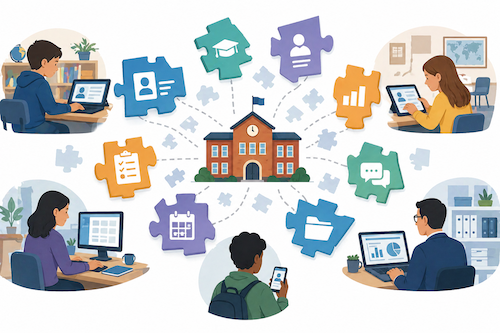
Student data scattered across disconnected systems is quietly eroding school effectiveness. K-12 districts struggle when attendance records live in one platform, grades in another, behavioral notes in a third, and special education files in a fourth. This fragmentation creates real problems for students, parents, and teachers.
When data lives in silos, teachers lack complete pictures of student progress. A math teacher never learns that a student struggled with reading comprehension last semester, even though that context could explain current struggles. Counselors spend hours hunting for information instead of using it to help. Special education teams cannot coordinate services effectively when IEP data stays separate from classroom performance metrics.
Parents face confusion. One system shows their child is struggling in math. Another reveals incomplete homework submissions. A third contains behavioral incidents. No single dashboard connects these dots for families trying to support their kids. School-home partnerships weaken when communication breaks down at the data level.
The operational burden compounds. Administrative staff duplicate data entry across platforms. Reconciliation errors multiply when the same student appears under slightly different names in different systems. Privacy risks increase with each disconnected transfer of sensitive information. Districts allocate resources to data management rather than instruction.
The cost extends to decision-making. District leaders cannot generate accurate reports on school performance when data quality suffers. They cannot identify trends in student success or failure. They cannot allocate intervention resources where they matter most.
Consolidating student data systems addresses these problems directly. Integrated platforms create single sources of truth. Teachers access complete student profiles instantly. Counselors coordinate support without data delays. Parents receive clear, unified updates. Administrative staff focus on students instead of spreadsheets.
The school-home connection strengthens when data systems work together rather than against each other. Students benefit when adults have accurate information at the moment they need it. This is not merely