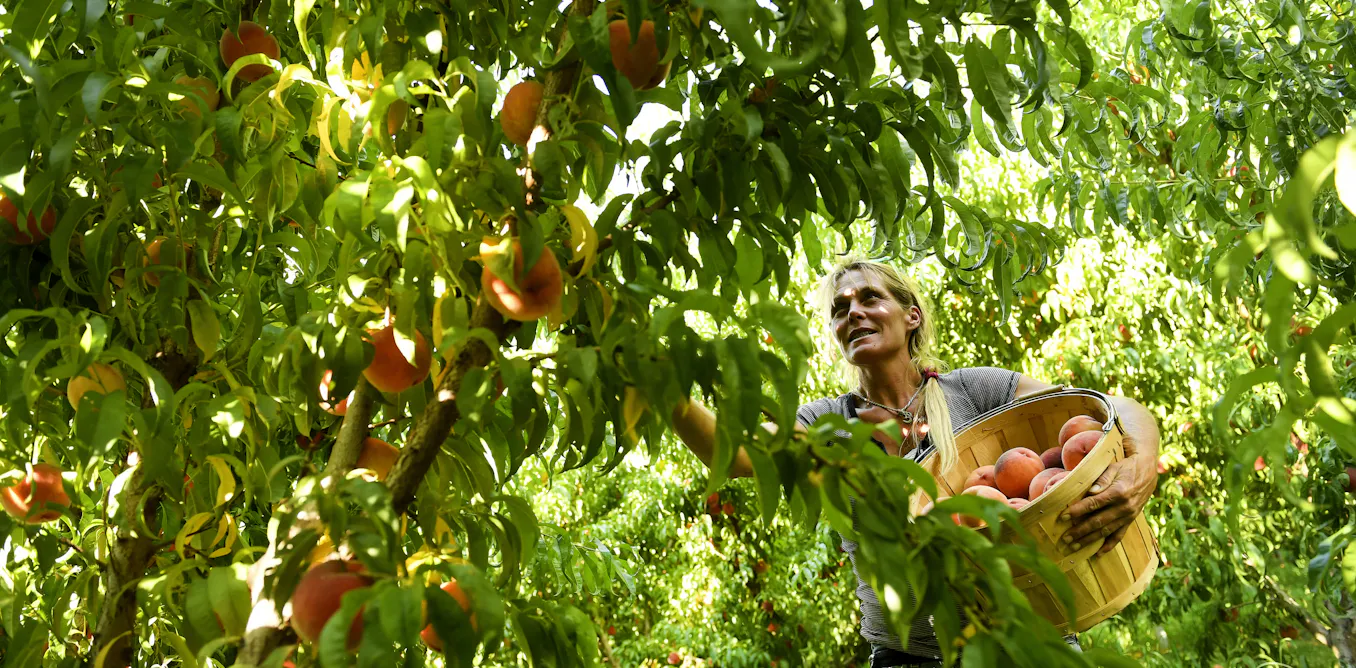
Colorado's peach industry faces a dual threat from a fungal disease and shifting climate patterns that are reshaping one of the state's agricultural mainstays.
Cytospora canker, a fungal infection, damages peach trees by creating cankers, or lesions, on branches and trunks. The disease gradually weakens trees and reduces fruit production across orchards. As the fungus spreads, it forces farmers to remove infected trees entirely, cutting into yields and revenue.
Climate change compounds the problem. Warmer temperatures and erratic precipitation patterns alter conditions that peach growers have relied on for decades. Peach trees require specific chilling hours during winter to produce fruit reliably. As winters warm, trees receive fewer of these critical cold hours, which can reduce flowering and fruiting. Simultaneously, unexpected late spring frosts damage blossoms that have emerged early due to warmer conditions.
The disease itself thrives in conditions that climate change creates. Cytospora canker develops more aggressively in stressed trees, and climate stress leaves peach orchards vulnerable. Trees weakened by drought, irregular watering, or temperature swings become easier targets for fungal infection.
Colorado's peach industry centers on the Western Slope region, where orchards generate millions in annual revenue and support farming communities. The combination of fungal pressure and climate instability threatens both current production and long-term viability.
Researchers and extension services are working to help growers manage Cytospora canker through improved pruning practices, orchard sanitation, and variety selection. Some growers are also experimenting with peach varieties bred for warmer climates and disease resistance. However, adapting an entire agricultural region takes time, investment, and coordination between farmers, researchers, and policymakers.
The peach industry's struggle reflects a broader challenge across American agriculture. Climate change does not simply warm the