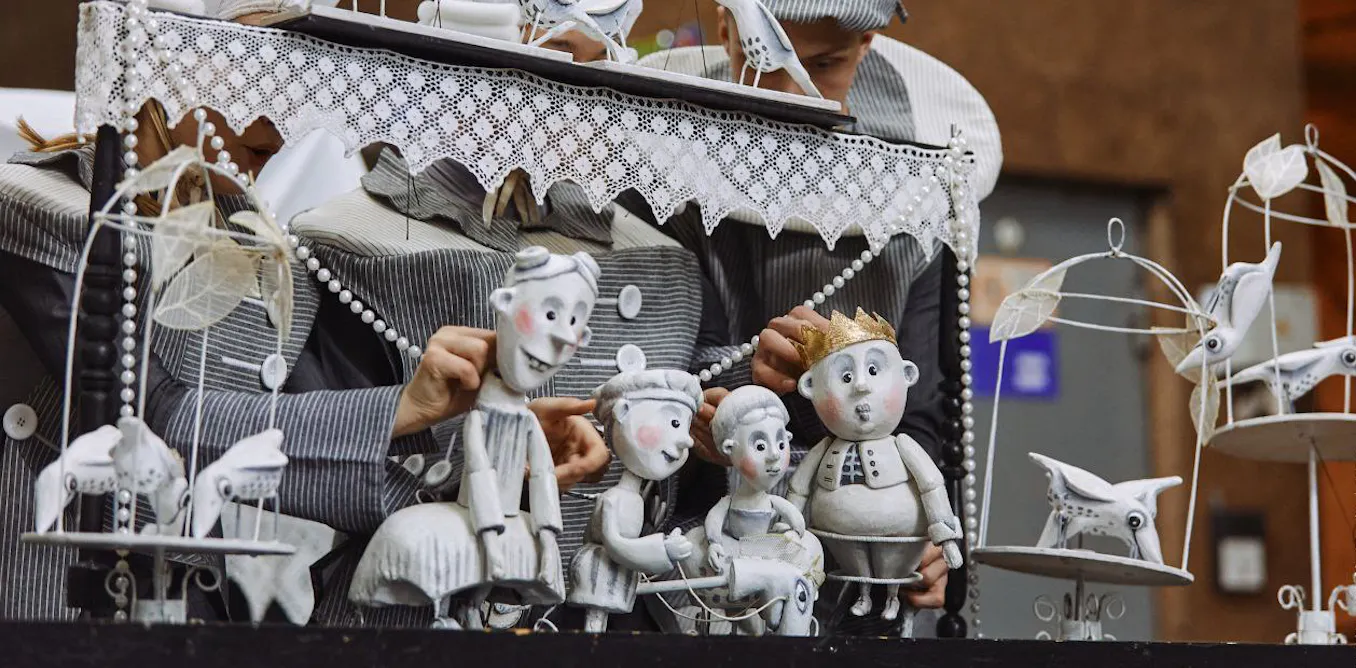
# Puppet Shows Offer Storytelling and Solace in Ukrainian Bomb Shelters
Ukrainian puppet shows have transformed into lifelines for civilians sheltering from bombardment. These performances bring psychological relief, cultural continuity, and hope to families hiding in bomb shelters across the country.
Puppet theater traditionally serves educational and entertainment functions in schools. In wartime Ukraine, the medium has taken on deeper meaning. Performances reach children and adults forced into shelters for extended periods, offering distraction from trauma and loss. The shows maintain cultural identity during active conflict and provide structure to days otherwise defined by uncertainty and fear.
These puppet performances address psychological needs that formal education cannot meet alone. Children experiencing repeated air raids and displacement carry invisible wounds. Storytelling through puppets creates safe psychological distance while addressing real emotions. The familiar narratives help young viewers process fear and maintain connections to pre-war normalcy.
The shows also serve broader resistance and community functions. Cultural expression becomes an act of defiance against attempts to disrupt Ukrainian life. Performers and organizers demonstrate that normal human activities, including art and learning, continue despite military aggression. This assertion of cultural continuity strengthens collective resilience.
Theater professionals have adapted traditional puppet plays for shelter audiences. Performances fit physical constraints of underground spaces while remaining engaging for viewers of all ages. Some organizations have trained additional performers to expand reach across multiple shelters in different regions.
The puppet shows reflect how communities respond to crisis through existing cultural institutions. Rather than waiting for normalized conditions to resume education and arts programming, Ukrainians have embedded these activities into survival itself. This integration recognizes that psychological and cultural wellbeing matter as much as physical safety during prolonged conflict.
These performances represent creative problem-solving under extreme circumstances. They demonstrate how traditional art forms adapt when circumstances demand both resilience and normalcy.