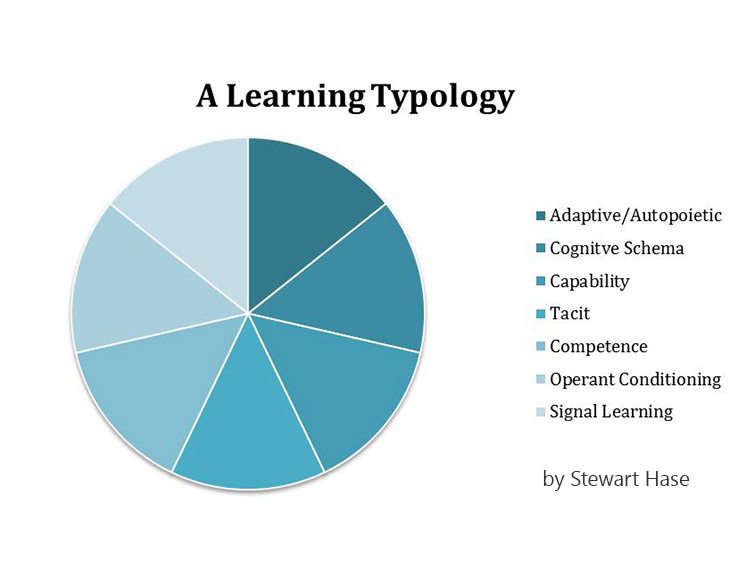
# A Learning Typology: 7 Ways We Come To Understand
TeachThought has released a framework identifying seven distinct pathways through which people develop understanding, positioning the model as a typology rather than a taxonomy. The distinction matters. A typology describes different types or categories without ranking them hierarchically. A taxonomy organizes knowledge into ordered levels, typically with some categories deemed more advanced than others.
The framework reflects growing recognition among education researchers that learners process and internalize information through varied mechanisms. Rather than assuming a single pathway to comprehension, the typology acknowledges that students may grasp concepts through different entry points. Some learners understand through hands-on experience. Others develop understanding through dialogue, observation, reflection, or systematic analysis.
This approach aligns with broader shifts in educational psychology away from fixed learning styles toward understanding how different cognitive processes contribute to knowledge acquisition. The typology avoids the limitations of outdated learning-styles theories, which suggested certain students were "visual" or "kinesthetic" learners with little scientific backing. Instead, it emphasizes that comprehension itself involves multiple cognitive mechanisms working in concert.
For educators, the typology offers practical application. Lesson design that incorporates multiple ways of coming to understand reaches more students. A science unit might combine direct observation, peer discussion, hands-on experimentation, and individual reflection. Students encounter the same content through different cognitive channels, increasing the likelihood that understanding takes root.
The non-hierarchical structure proves essential. The typology does not position one form of understanding as superior to another. A student who grasps mathematics through visual-spatial reasoning develops genuine understanding just as much as one who works through logical symbolic manipulation. Teachers who recognize all seven pathways as legitimate reduce the pressure to force all learners into a single cognitive mold.
TeachThought's framework joins other contemporary models emphasizing cognitive diversity in learning environments. The practical payoff