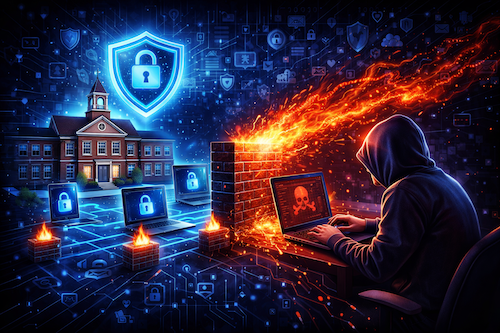
U.S. K-12 schools face a watershed moment in cybersecurity. District leaders increasingly recognize that cyberattacks represent not a possibility but a certainty, shifting focus from prevention alone to building operational resilience.
The 2025 threat landscape has tested this reality across hundreds of districts. Ransomware attacks, data breaches, and service disruptions have forced schools to confront gaps in their ability to recover quickly from digital incidents. When systems go down, instruction stops, student data becomes vulnerable, and operational chaos spreads.
Digital resilience differs from traditional cybersecurity. While prevention guards against attacks, resilience ensures schools can detect threats rapidly, contain damage, and restore critical services with minimal disruption. This means redundant systems, offline backup protocols, isolated networks for essential functions, and documented recovery procedures tested regularly.
The stakes affect everyone. Teachers lose access to grading systems and curriculum materials. Students miss instruction and fall behind. Parents lose visibility into their children's progress. Administrators face legal liability and reputational damage. Districts also spend thousands on incident response, often with limited budgets already stretched thin.
Building resilience requires investment districts often lack. Small rural schools struggle particularly. Many operate with minimal IT staff, aging infrastructure, and budgets that prioritize classroom spending over technology defense. Larger urban districts have more resources but face complexity managing networks across dozens of buildings.
Federal and state support remains inconsistent. The Cybersecurity and Infrastructure Security Agency (CISA) offers guidance and resources, but few K-12 schools access these tools systematically. Some states mandate security standards, but enforcement varies widely.
Effective resilience demands three steps. First, conduct honest assessments of current vulnerabilities and recovery capabilities. Second, prioritize investments in backup systems and staff training over flashy security tools. Third, develop clear incident response plans that keep student safety and data protection at the center