# When STEM Lessons Are Too Easy, Students Stop Thinking
Teachers often equate student engagement with learning, but new thinking challenges this assumption. When STEM lessons lack adequate difficulty, students disengage from actual thinking, research suggests.
The problem stems from a common misunderstanding of engagement. A classroom where students appear busy, collaborative, and enthusiastic may not produce deep learning if the content fails to challenge them. Students need cognitive struggle to develop real understanding.
STEM instruction frequently falls into this trap. Hands-on activities and group projects feel engaging, but without appropriate complexity, they become procedural rather than conceptual. Students follow steps without grasping why those steps matter. They complete tasks without wrestling with underlying principles.
The research indicates that optimal learning occurs at the edge of a student's ability. Too-easy content leads students to coast. They perform tasks mechanically, answering questions without real reasoning. Motivation drops when students realize the work doesn't require genuine thinking.
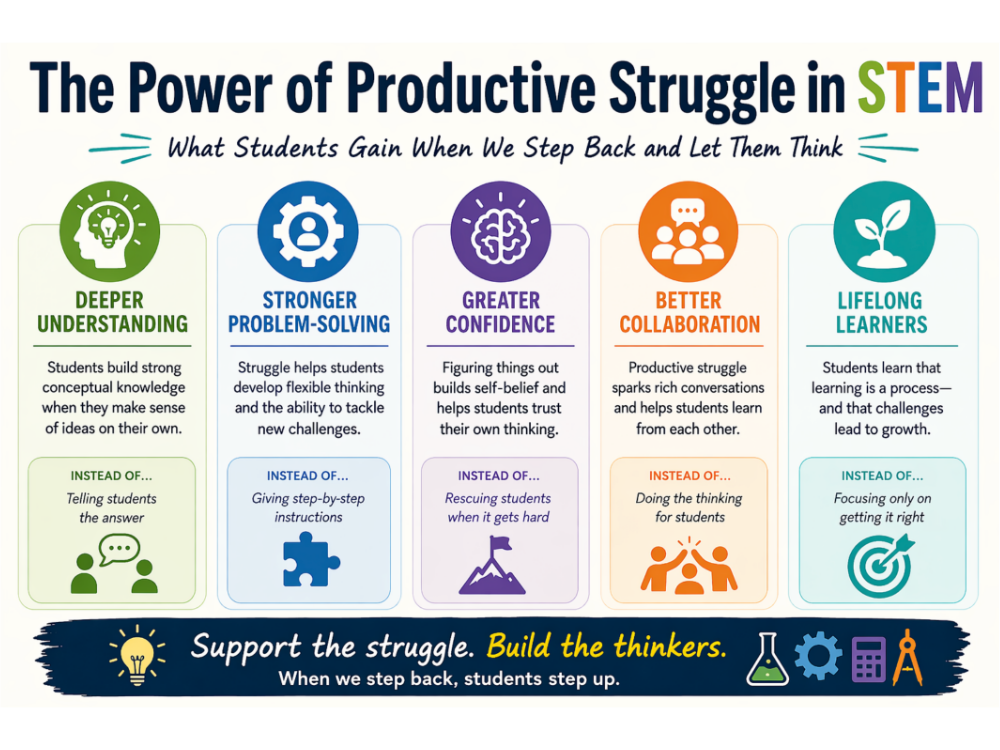
Effective STEM teaching requires calibrating difficulty intentionally. Teachers must design lessons that provoke confusion, prompt questions, and demand problem-solving. Students need to encounter obstacles they must actively overcome. This kind of cognitive load generates the struggle necessary for learning.
The distinction matters for classroom practice. A lesson where students build a bridge using straws and tape looks engaging. But if students simply follow a template without calculating load-bearing capacity or testing hypotheses, they're not thinking like engineers. They're following instructions.
Shifting away from "busyness as learning" requires rethinking lesson design. Teachers should embed genuine problems without obvious solutions. They should resist providing step-by-step guides when students could struggle productively to discover methods themselves.
This doesn't mean making lessons artificially difficult or frustrating. The goal is appropriate challenge, where difficulty serves conceptual understanding. Students should recognize that thinking hard about something matters.
Schools