# Summary
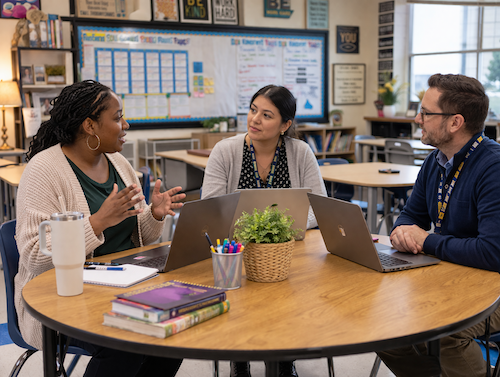
School leaders struggle to sustain meaningful change because they often fail to include teachers in decision-making. When educators help shape new initiatives, reforms stick. Teachers at the classroom level understand what works and what doesn't. They see firsthand which instructional frameworks, technologies, and student support systems actually improve learning.
Schools implementing new curricula, teaching methods, or digital tools without teacher input frequently encounter resistance. Teachers block changes they didn't help design. They perceive mandates from above as disconnected from reality. Change becomes something imposed rather than something owned.
The opposite happens when educators have voice in the process. Teachers become invested. They understand the reasoning behind new approaches. They can adapt strategies to their students' actual needs. What starts as a top-down initiative transforms into shared commitment to better outcomes.
Research on organizational change confirms this pattern across sectors. Sustainable transformation requires buy-in from those doing the work. In schools, that means teachers. Their classroom expertise matters. Their concerns about implementation deserve serious consideration. Their suggestions often improve initiatives before they roll out.
Leaders serious about change need to shift how they operate. Announce new directions after consulting teachers, not before. Form working groups with classroom educators alongside administrators. Give teachers real power to modify initiatives, not just token input. Listen when experienced teachers say a new framework needs adjustment.
This approach takes more time upfront. It delays rollout timelines. Leaders lose some control over the final product. But the payoff comes in sustainability. Changes implemented with educator voice actually persist. They improve practice over time rather than fading away. Teachers remember why the change matters. They defend it when obstacles emerge.
Schools cannot innovate without their educators. Teachers possess irreplaceable knowledge about what happens inside classrooms. When leaders recognize this and invite teachers into the design process, change becomes real. It becomes theirs.