# An Updated Guide to Questioning in the Classroom
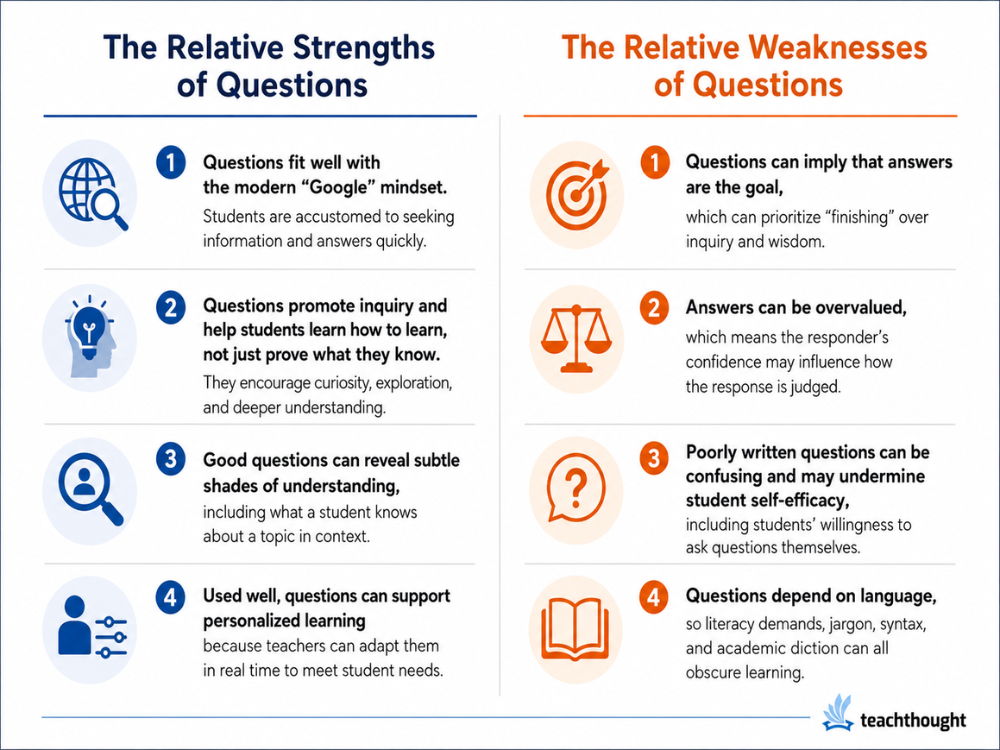
TeachThought has published a revised resource reframing how educators approach student questions in classroom settings. The guide treats questioning as evidence of learning rather than a gap in knowledge.
The core argument centers on a shift in perspective. Questions signal curiosity and metacognition. Students who ask questions demonstrate they have learned enough to recognize what remains unknown. This represents cognitive progress, not deficiency.
The guide emphasizes that teachers benefit from encouraging questions across all grade levels and subject areas. When classrooms normalize inquiry, students develop critical thinking skills and engage more deeply with material. The ability to formulate questions requires students to synthesize information, identify patterns, and spot contradictions.
Traditional classroom structures often discourage questioning. Students fear judgment or worry about asking something "too obvious." This suppresses the very behavior that advances learning. The guide advocates for deliberate practice in asking good questions, treating it as a teachable skill.
The resource outlines practical strategies teachers can implement. These include dedicating time specifically for student questions, modeling how to ask effective questions yourself, and responding to questions without immediately providing answers. Instead, teachers can guide students to discover solutions independently.
Question quality matters. Open-ended questions that require explanation differ from closed questions with single answers. The guide suggests scaffolding students toward asking increasingly sophisticated questions throughout a unit or course.
Administrators and instructional coaches can support this shift by creating evaluation rubrics that reward questioning habits. Professional development for teachers should address how to manage classroom discussion when questions arise unexpectedly, ensuring instruction remains responsive rather than rigid.
Schools implementing this approach report increased engagement and ownership of learning among students. When students see questions as tools rather than interruptions, participation rates rise across demographic groups.
TeachThought positions this guide within broader shifts toward student-centered instruction and personalized learning pathways. The resource provides actionable steps for teachers at