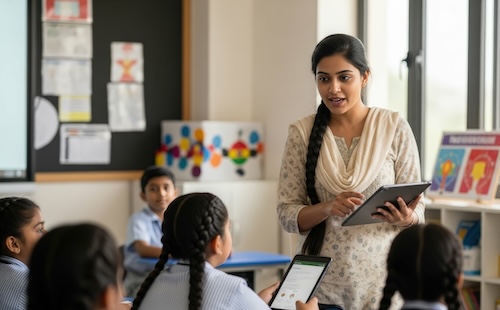
Teachers worldwide face a real tension. They want artificial intelligence tools to help them plan better lessons and work more efficiently. But they worry that using these tools pushes students toward more screen time, which research links to attention problems, sleep disruption, and reduced face-to-face interaction.
The blind spot in this debate centers on a false choice. The question assumes that using AI for lesson planning automatically means students spend more time on screens. That assumption misses the actual value proposition of classroom AI.
When teachers use AI to generate lesson outlines, differentiate instruction for students at different levels, or create assessment materials, they reclaim planning time. That recovered time flows back into direct teaching, small-group instruction, and one-on-one support. Students don't necessarily see more screens. Instead, teachers deliver more thoughtful, personalized instruction in non-digital settings.
A fifth-grade teacher in São Paulo articulated this dilemma during a professional development session. She wanted AI to sharpen her lesson planning but feared the tool would trap students in front of devices. Her concern reflects a widespread anxiety among educators globally.
The real question isn't whether AI increases screen time. The question is whether AI helps teachers teach better without screens. When AI handles routine planning work, teachers gain space to focus on what only humans do well: build relationships, model thinking, ask probing questions, and respond to real confusion in the moment.
This reframing matters for schools deciding whether to invest in AI tools. Purchase decisions often stall because administrators and teachers conflate "using AI" with "kids on screens." They're not the same thing. AI for administrative and planning purposes operates behind the classroom door. Students never touch it.
The screen-time conversation deserves its place in education policy. Too much device use in schools does harm learning. But that concern shouldn't block teachers from adopting tools that make their work smarter and their time more