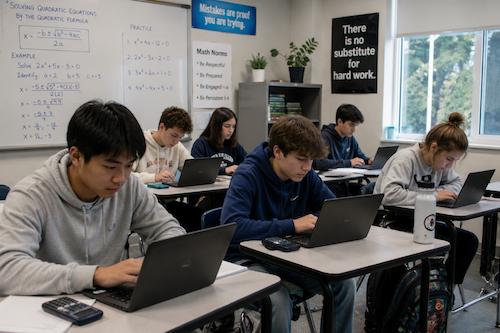
A new survey reveals that 68 percent of top-performing math students use AI tools to support their learning when tackling assignments and exams. The finding suggests that artificial intelligence has become a mainstream resource in how students approach mathematics coursework.
The survey captures a notable shift in study habits. Rather than relying solely on traditional tutoring, textbooks, or teacher office hours, nearly seven in ten high-achieving students now turn to AI when they need extra help understanding math concepts or working through problems. This adoption rate signals that AI tutoring platforms and chatbots have gained credibility among the students most likely to succeed academically.
The data matters because it reshapes how educators and parents should think about AI in classrooms. This is not a fringe behavior limited to a small cohort of students. The adoption spans high performers, the population most likely to use tools effectively and derive genuine learning benefits rather than shortcuts.
However, the survey raises practical questions for schools. How should teachers distinguish between legitimate AI-assisted learning and academic dishonesty? Many districts have not yet developed clear policies on when and how students can use AI for math work. Some schools ban it outright during assessments. Others permit it as a learning aid but not during tests. The lack of uniform guidance creates confusion.
The results also highlight an equity gap. Access to quality AI tutoring tools often depends on whether families can afford premium subscriptions. Free versions exist but may lack the sophistication of paid options. Students without such access could fall further behind peers who use advanced AI tutors regularly.
For math educators, the survey underscores that AI tutoring tools now function as a competing instructional resource. Schools cannot ignore student demand or the demonstrated effectiveness these tools show for top performers. Instead, districts should establish explicit policies about appropriate AI use, integrate AI literacy into teacher training, and work to ensure all students can access quality digital tutoring resources regardless of household income.