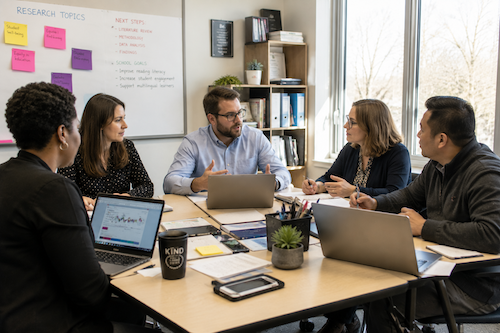
A persistent gap separates educational research from classroom practice, leaving K-12 schools unable to access findings that could improve student outcomes. Higher education institutions produce vast amounts of research annually, yet teachers and administrators rarely encounter these discoveries in usable form.
The disconnect stems from structural barriers. Researchers operate in academic silos focused on publishing in peer-reviewed journals. K-12 practitioners work under different constraints: tight budgets, limited time, and immediate pressure to raise test scores. Universities rarely translate findings into formats teachers can implement. K-12 schools lack systematic channels to request or access relevant research.
Several solutions exist. Universities can establish formal partnerships with nearby school districts, creating two-way communication pipelines. Researchers should embed themselves in classrooms to test interventions under real conditions rather than controlled laboratory settings. Higher education can fund fellowships placing researchers in schools for extended periods.
Teacher preparation programs bear responsibility too. Education schools can require future teachers to engage with current research during their training, building habits of consulting evidence throughout their careers. Institutions can also create accessible research summaries and practice guides written for busy educators, not academic audiences.
Some universities already model this approach. Boston University's Center for Research & Reform in Education partners with districts to study and implement evidence-based literacy practices. The University of Pennsylvania's Graduate School of Education works directly with Philadelphia schools on curriculum design.
Funding mechanisms matter. Grant programs rewarding university-district collaborations accelerate progress faster than isolated academic research. The National Science Foundation and Department of Education can prioritize proposals demonstrating real classroom testing and teacher input from proposal design onward.
The stakes are high. Students in under-resourced schools miss benefits of proven teaching methods simply because information fails to travel from universities to classrooms. Closing this research-practice gap requires higher education to shift from publish-or-perish cultures toward partnership models. Universities must see K-12 schools as collaborators