# Project-Based Learning Energizes Student Interest in STEM
Project-based learning (PBL) engages students directly with real-world problems that demand STEM skills to solve. Rather than passive classroom instruction, PBL places students in active roles where they apply science, technology, engineering, and mathematics to tackle practical challenges.
The approach addresses a growing reality: STEM competencies now permeate daily life. Students encounter these fields in how they learn, work, and consume entertainment. Schools adopting PBL frameworks report stronger student engagement with STEM content compared to traditional lecture-based models.
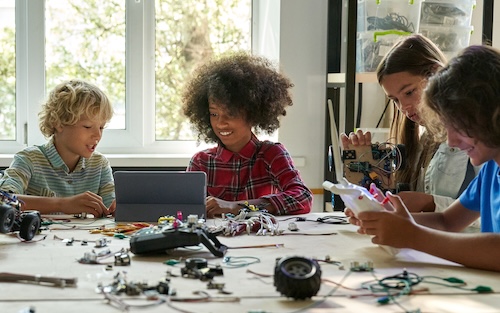
In project-based learning environments, students work collaboratively on defined problems. They research solutions, test hypotheses, iterate designs, and present findings. This mirrors how professionals actually work in STEM careers. The structure helps students see connections between classroom concepts and the world beyond school walls.
Research on PBL consistently shows benefits for student motivation and retention. When learners understand why they need specific knowledge, they invest more effort in mastering it. A student designing a water filtration system learns chemistry and engineering simultaneously, understanding both disciplines through application rather than abstraction alone.
Schools implementing PBL often report measurable outcomes. Student performance on standardized assessments remains stable or improves, while engagement metrics climb. Teachers observe increased persistence when students face setbacks, since they own the problem-solving process.
The model also builds workforce readiness. Employers consistently cite teamwork, communication, and problem-solving as essential workplace skills alongside technical knowledge. PBL develops all three simultaneously.
Challenges exist. Project-based learning requires teacher training and curricular redesign. Time management demands attention since complex projects extend over weeks rather than days. Schools need resources to support hands-on materials and technology access.
Districts expanding STEM programs increasingly view PBL as foundational rather than supplementary. When students grapple