# When STEM Lessons Are Too Easy, Students Stop Thinking
Teachers often equate student engagement with learning. A classroom where students are busy and motivated feels productive. But research shows this assumption misses something vital: challenge drives deeper thinking.
In STEM education especially, easy lessons backfire. When material feels simple, students coast. They complete tasks without wrestling with concepts. They memorize steps instead of understanding systems. The busy work creates an illusion of progress that masks cognitive stagnation.
The problem deepens with well-intentioned scaffolding. Breaking complex ideas into smaller pieces helps students access content. But when scaffolds remain in place too long, they become crutches. Students never learn to struggle productively. They never experience the discomfort that precedes breakthrough thinking.
Engagement alone is not learning. A student can be highly engaged while building surface-level understanding. They answer questions quickly, finish assignments on time, participate enthusiastically. None of this guarantees they've grasped the underlying logic of a physics problem or the architecture of an algorithm.
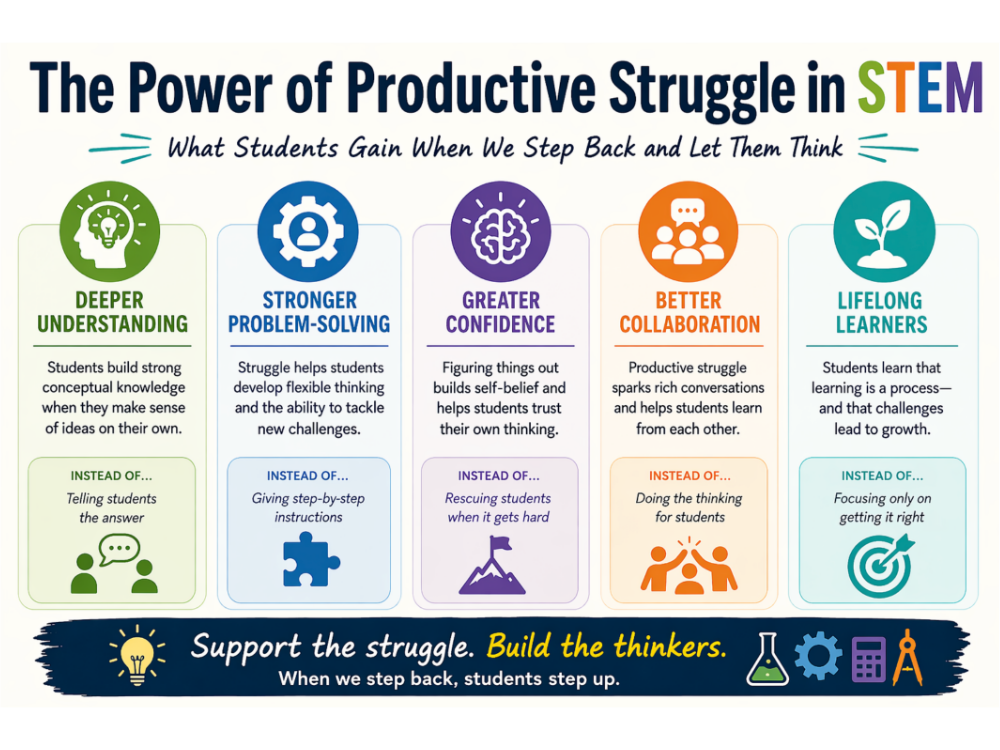
STEM instruction needs recalibration. Teachers should design lessons that create productive struggle. This means pushing students beyond comfort zones. It means asking questions that don't have immediate answers. It means allowing failure as part of the learning process.
The sweet spot exists between frustration and boredom. Too much difficulty and students shut down. Too little and they disengage intellectually. Finding that balance requires teachers to understand their students' current capability and intentionally design experiences just beyond reach.
This approach demands more from educators than simply keeping students busy. It requires diagnostic assessment, flexibility, and willingness to let students sit with confusion. But the payoff justifies the effort. Students who regularly encounter appropriate challenge develop resilience, problem-solving skills, and deeper understanding of STEM concepts.
Busy does not equal learning. Thinking does.