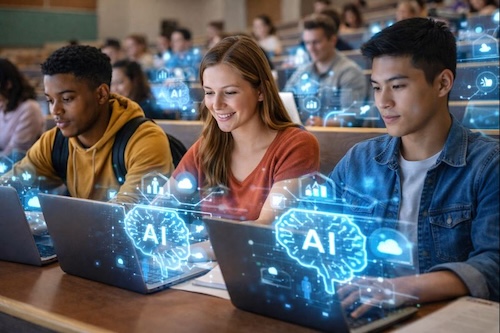
AI tools are reshaping how young people approach work and entrepreneurship, creating conditions for a wave of student-led startups and independent ventures over the next few years.
Today's students have access to generative AI platforms that handle routine tasks like coding, content creation, market research, and business planning. These tools lower barriers to entry for aspiring entrepreneurs who previously needed significant capital, technical expertise, or years of experience. A student can now prototype a product, write business copy, analyze competitors, and launch operations from their bedroom or kitchen table.
The shift matters for several reasons. First, students no longer need to wait for traditional pathways like internships or entry-level jobs to develop entrepreneurial skills. AI serves as an accessible co-worker, tutor, and validator rolled into one. Second, schools and universities increasingly teach AI literacy alongside business fundamentals, normalizing these tools as legitimate problem-solving resources. Third, the psychological barrier to starting something independently drops when AI handles the technical or creative work that once required hiring specialists or collaborators.
This trend intersects with broader labor market changes. Many students recognize that traditional employment offers less stability than previous generations experienced. The combination of economic uncertainty and accessible AI tools creates motivation to build independent income streams. Some educators worry this shifts focus away from deeper learning and critical thinking. Others see it as practical preparation for a hybrid work future where people juggle multiple projects simultaneously.
The prediction assumes widespread AI access continues and educational institutions integrate these tools into curricula rather than restricting them. It also assumes regulations don't dramatically constrain AI capabilities.
What remains unclear is whether this entrepreneurial energy translates to sustainable, scalable businesses or remains largely experimental. Schools will need to balance celebrating student initiative with teaching discernment about when AI assistance helps versus when it replaces thinking.
THE TAKEAWAY: AI accessibility could spark an entrepreneurial generation of students, but success depends on schools teaching judgment alongside tool use