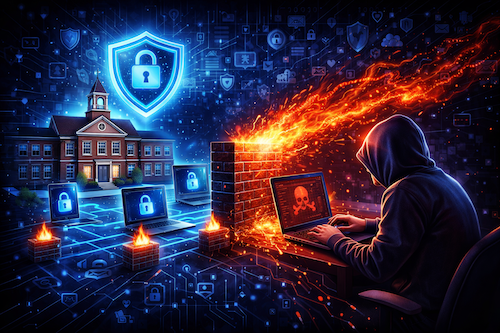
U.S. K-12 districts face an urgent reality: cyber attacks on schools are no longer a matter of if, but when. District leaders learned this lesson decisively in 2025, as cyberattacks disrupted learning across hundreds of schools nationwide.
The shift toward digital-first education has created expanded vulnerability. Student information systems, learning management platforms, email servers, and administrative databases all depend on network infrastructure that attackers target routinely. When these systems fail, schools lose access to attendance records, grades, schedules, and communication tools. Classroom instruction halts. Parents receive no updates. Staff cannot function.
Prevention remains the foundation of school cybersecurity, but it cannot guarantee protection. Firewalls, password policies, and security software reduce risk significantly. Yet no defense is impenetrable. Sophisticated attacks exploit zero-day vulnerabilities. Human error opens doors. Nation-state actors and criminal ransomware gangs target schools deliberately because districts often pay quickly to restore access.
Digital resilience differs from prevention. Resilience assumes breaches will occur and focuses on rapid response and recovery. Schools with strong resilience protocols minimize downtime, protect student data during incidents, and restore normal operations faster than unprepared districts. This requires backup systems, incident response plans, staff training, and tested recovery procedures.
Many districts lack these fundamentals. Budget constraints force difficult choices between technology investment and instruction. Rural and under-resourced districts particularly struggle to hire cybersecurity specialists or fund redundant systems.
The stakes extend beyond operational disruption. Student data breaches expose minors to identity theft and privacy violations. Schools legally must notify families of compromised information. Ransomware payments drain education budgets from classrooms. Repeated outages undermine trust in school technology systems.
Federal guidance exists. The Cybersecurity and Infrastructure Security Agency provides free resources and frameworks. The Every Student Succeeds