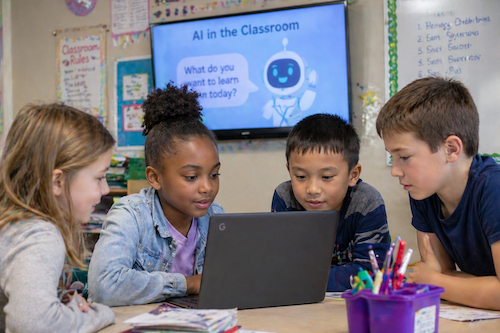
# When AI Means Something Different in Every Classroom
Schools across the country lack consistent policies on artificial intelligence use, leaving teachers to make individual decisions about when and how to deploy the technology. This fragmented approach reflects the early stage of AI adoption in education.
Without district-level guidance, teachers implement AI tools in isolation. One educator might use ChatGPT to generate writing prompts while another blocks it entirely. A math teacher could employ AI tutoring software while the English department debates whether student use constitutes academic dishonesty. This inconsistency creates confusion for students, who receive conflicting messages about acceptable AI use depending on which classroom they enter.
The lack of unified structure stems partly from genuine uncertainty. Districts struggle to balance AI's potential benefits with legitimate concerns about academic integrity, data privacy, and equity. Schools serving low-income communities worry that AI tools may deepen existing achievement gaps if access remains unequal. Teachers express anxiety about whether algorithms can truly personalize learning or simply automate instruction.
Some educators see value in this decentralized moment. Teachers experimenting with AI tools generate real-world data about what works. They identify problems before policies become entrenched. Early adopters develop expertise that informs later district decisions.
However, this ad-hoc approach carries costs. Students in the same school receive different instruction and face different standards. Teachers working in isolation cannot easily share discoveries or troubleshoot problems. Districts miss opportunities to negotiate data agreements or ensure vendors meet equity standards collectively.
Forward-thinking districts have begun establishing AI governance frameworks. These policies typically address four areas: student data protection, teacher professional development, academic integrity standards, and access equity. Districts that move quickly can shape AI adoption rather than react to it.
The window for intentional policy development remains open but narrowing. As AI tools proliferate in classrooms, establishing shared expectations becomes harder. Schools that delay decisions risk cementing inconsistent practices into