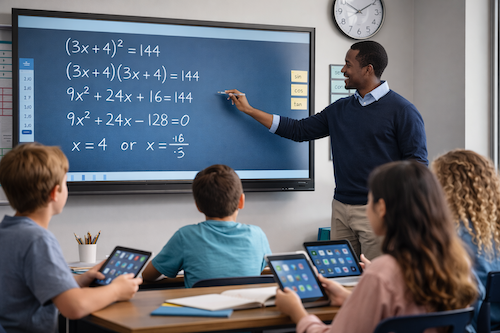
Schools must rewrite math curricula based on pedagogical principles rather than hope that artificial intelligence will solve teaching problems, according to education experts examining the future of mathematics instruction.
The argument centers on a fundamental problem: AI tools cannot substitute for thoughtful curriculum design and effective teaching methods. As classrooms increasingly deploy chatbots and algorithmic tutoring systems, educators risk automating outdated approaches rather than reimagining how students learn mathematics.
Current math standards often emphasize procedural fluency and test preparation over conceptual understanding and problem-solving skills. Adding AI to these frameworks simply accelerates poor instruction. Students still memorize algorithms they don't understand. They still struggle to apply mathematics to real situations.
Experts stress that curriculum revision must precede technology adoption. Schools need standards that prioritize mathematical thinking, reasoning, and application. This means teaching students why methods work, not just how to execute them. It requires tasks that connect abstract concepts to concrete problems students encounter.
The challenge involves professional development. Teachers need time and training to understand reformed curricula before implementing them, with or without technology. Many districts lack resources for such preparation, creating pressure to adopt AI solutions as shortcuts.
Some schools testing redesigned curricula report improved outcomes. Students demonstrate stronger conceptual understanding and greater ability to transfer knowledge across contexts. These successes relied on educator expertise and intentional pedagogy, not algorithmic intervention.
The path forward requires districts to examine their math standards critically. Which skills matter most? What do students actually need for college, careers, and informed citizenship? Only after answering these questions should schools consider which tools, including AI, support those goals.
AI has potential roles in personalized practice, immediate feedback, and data analysis. But technology serves curriculum, not the reverse. Educators must lead the redesign process, informed by research on how students learn mathematics. Delegating this work to algorithms guarantees that innovations in technology will not translate to improvements