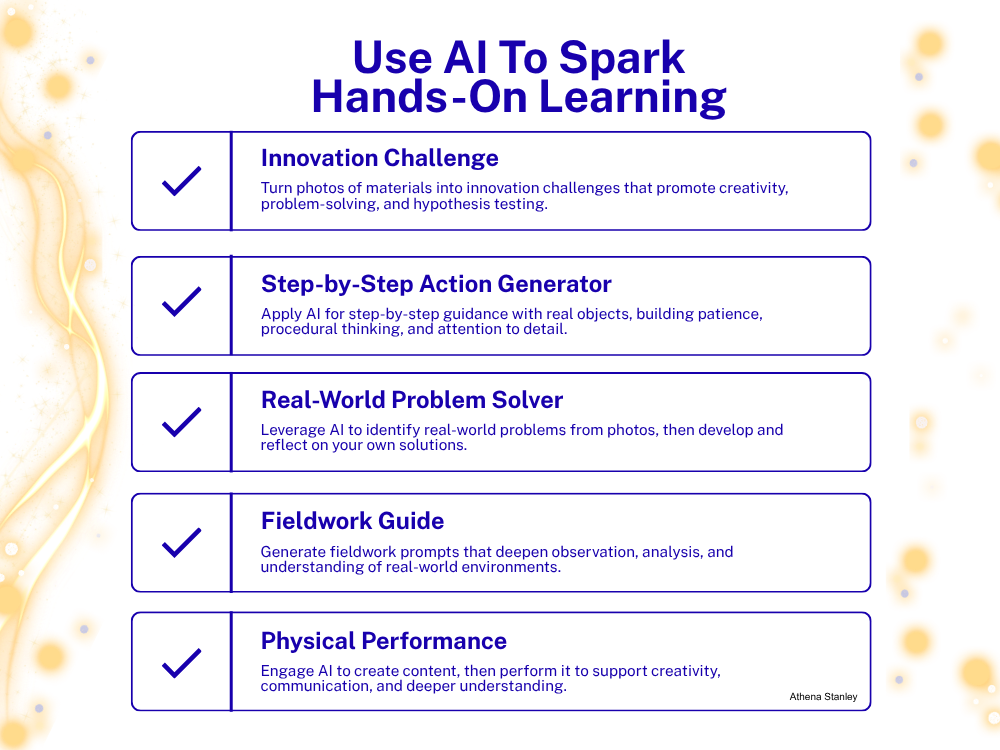
Teachers can use AI to connect digital tools with physical learning experiences in five practical ways, according to TeachThought. One approach involves students photographing their surroundings at school, home, or in their community, then asking AI to identify problems within those settings. This method pushes students beyond passive observation. Rather than receiving ready-made solutions, students engage in critical thinking by analyzing the issues AI surfaces in their own environments.
The strategy bridges the gap between screen-based learning and real-world application. Students develop problem-solving skills by investigating authentic challenges they encounter daily. This hands-on approach transforms AI from a passive information source into a catalyst for exploration and discovery.
TeachThought emphasizes that such applications move beyond traditional classroom instruction. Students become active investigators of their communities, using technology to sharpen observational skills and analytical thinking. The method works across grade levels and various subject areas, from environmental science to social studies.
The framework prioritizes student agency and environmental awareness. By connecting digital tools to physical spaces, educators create learning experiences that resonate with students' lived experiences.